Can one drug reverse pancreatic damage? That’s exactly what many laboratories are now thinking about. I have been engaged in Tirzepatide peptides metabolic research for more than 15 years. So many peptides have come and gone in that time.
This is an analysis of the effects of Tirzepatide on beta cells. I will show you how we lower fasting glucose. I will also talk about whether it can actually heal the pancreas. I’ll also tell you where you can get peptides for your lab work, give you dosage information and go over some study data.
What Is Tirzepatide and Why Do Researchers Care About It?
Tirzepatide is a dual-acting peptide that binds and activates two hormone receptors. These are known as the GIP and GLP-1 receptors. Both are present in the pancreatic beta cells. Bind of Tirzepatide to these receptors leads to increased secretion of insulin. And it prevents the liver from dumping excess sugar into the bloodstream.
Most traditional drugs for diabetes target only one receptor. Two have Tirzepatide. That cranks the power up a lot. It also suppresses the appetite and slows down the digestion process. This helps to control blood sugar from several different angles at once.
An essential question is being asked by researchers in Tirzepatide peptides sciences. Is the peptide’s potential greater than glucose regulation? Is there any evidence it helps in the healing process?” Early evidence points to yes.
Key Facts About Tirzepatide- Simple Research Reference
| Property | Detail | What It Does | Why It Matters |
| Receptor Target | GIP + GLP-1 (dual) | Binds two hormone receptors | Stronger insulin boost than single drugs |
| Half-Life | About 5 days | Stays active in the body longer | Weekly dosing works in most models |
| Beta Cell Effect | Helps cells grow and survive | Turns on cell repair signals | May rebuild lost beta cell mass |
| Glucagon Control | Lowers glucagon release | Stops liver from making extra sugar | Cuts fasting blood sugar fast |
| Fasting Glucose | Drops 30 to 50 mg/dL on average | Better insulin use by cells | Key sign of diabetes improvement |
| Common Doses | 10mg, 30mg, 40mg, 60mg | Powder form for lab use | Fits many types of research studies |
How Does Tirzepatide Drop Fasting Blood Sugar So Fast?
Blood sugar fasting is one of the first tests when diagnosing diabetes. There are three obvious ways Tirzepatide acts on this quantity. The body responds to high blood sugar by first telling the beta cells to release insulin. Secondly, it prevents the liver from releasing stored sugar. Lastly, it improves glucose uptake in muscle and fat cells.
Studies have shown that 30 mg of Tirzepatide peptides can lower fasting glucose levels by 30 to 50 mg/dL. At higher doses (eg 60 mg Tirzepatide) marked decreases are observed. These are important changes. They suggest that cell function improves throughout the body.
The Ways Tirzepatide Lowers Fasting Blood Sugar
- Way 1- Smarter Insulin Release
When the blood sugar is high, Tirzepatide Peptides tells the beta cells to make insulin. Believe me on this one. It does not cause dangerously low blood sugar levels as do other previous drugs. The GIP domain of the peptide potentiates this response after meals. Longevity is preserved by GLP-1 component. When used in combination they enhance the accuracy and speed of insulin release.
- Way 2- Less Glucagon, Less Liver Sugar
One hormone, glucagon, orders the liver to let go of its sugar stores. Diabetics secrete too much of the hormone glucagon. This worsens sugar levels in the blood. This is blocked by Tirzepatide. Several studies have shown that it can lower glucagon levels by as much as 40%. This alone can lower morning fasting glucose levels. The effect was quickly demonstrated in animal models with the peptide Tirzepatide by researchers.
Fasting Glucose Results by Dose- Research Summary
| Dose | Average Glucose Drop | Study Length | Main Finding |
| 1. | 18 to 22 mg/dL | 8 weeks | Small but steady glucose drop |
| 2. | 30 to 40 mg/dL | 12 weeks | Clear beta cell response seen |
| 3. | 38 to 47 mg/dL | 16 weeks | Pancreas mass started to grow |
| 4 . | 45 to 55 mg/dL | 20 weeks | Near-normal fasting sugar levels |
Fast Facts on Fasting Glucose Benefits
- It reduces blood glucose levels during the early morning hours without any injury.
- Wider impact on blood sugar control by affecting numerous hormone pathways.
- If you launch a model 4-8 weeks from now, you should see results.
- Fasting glucose levels are significantly lower at higher doses.
- Works best in conjunction with a calorie-restricted diet.
Can Tirzepatide Repair Damaged Beta Cells Inside the Pancreas?
Alpha cells make and release glucose. Their function deteriorates gradually in type 2 diabetes. Some die out. Such damage was long believed by researchers to be irreversible. But that opinion is changing thanks to recent studies on the Tirzepatide research peptide.
Studies have demonstrated that Tirzepatide can stimulate the development of new beta cells in rodents. existing ones also can be prevented from dying. The GIP receptor is key here. It makes cells send out survival signals. Improved C-peptide levels have been demonstrated in human studies. Then it’s a sure sign that beta cells are working properly again.
This is more than sugar control. In this case, cell repair seems to be happening.
Beta Cell Recovery: What the Studies Show
- What Animal Studies Found
Tirzepatide increased beta cell mass in diabetic rats and mice over 8–16 weeks. Researchers found a rise in insulin-producing cells in the pancreas. Cell death markers were decreased by 25-35%. This has been seen over and over again in different studies of researchers using Tirzepatide peptide powder.
Tirzepatide vs. Other Diabetes Peptides- Beta Cell Impact
| Peptide | Beta Cell Effect | How It Works | Key Advantage |
| Tirzepatide | Grows and protects cells | Dual GIP/GLP-1 action | Strongest cell repair seen so far |
| Semaglutide (GLP-1) | Modest cell growth | GLP-1 receptor only | Good sugar control, less repair |
| Liraglutide | Mild cell protection | GLP-1 receptor | Older drug, weaker effect |
| Exendin-4 | Variable results | GLP-1 receptor agonist | Good baseline for comparison |
Tirzepatide Peptides has the most robust beta cell healing among all the peptides studied. Medications that work on both receptors have more effects than drugs that only work on one receptor. This chemical is now the gold standard for research into true pancreatic healing.
Pros and Cons for Beta Cell Research
- Pro: it really develops more beta cells, not only an increase of their efficiency.
- Pro: One advantage is that it protects the other beta cells and reduces cell death.
- Pro: The dual receptor activity effects are unique and cannot be replicated by a single medication.
- Pro: One of the benefits is that it enhances the effect of a low-calorie diet.
- Con: Most human studies on complete reversal have been done in people with early-stage diabetes.
- Con: Further studies are needed to assess the long-term effect on beta cells beyond 12 months.
How Do Researchers Use Tirzepatide in Real Lab Studies?
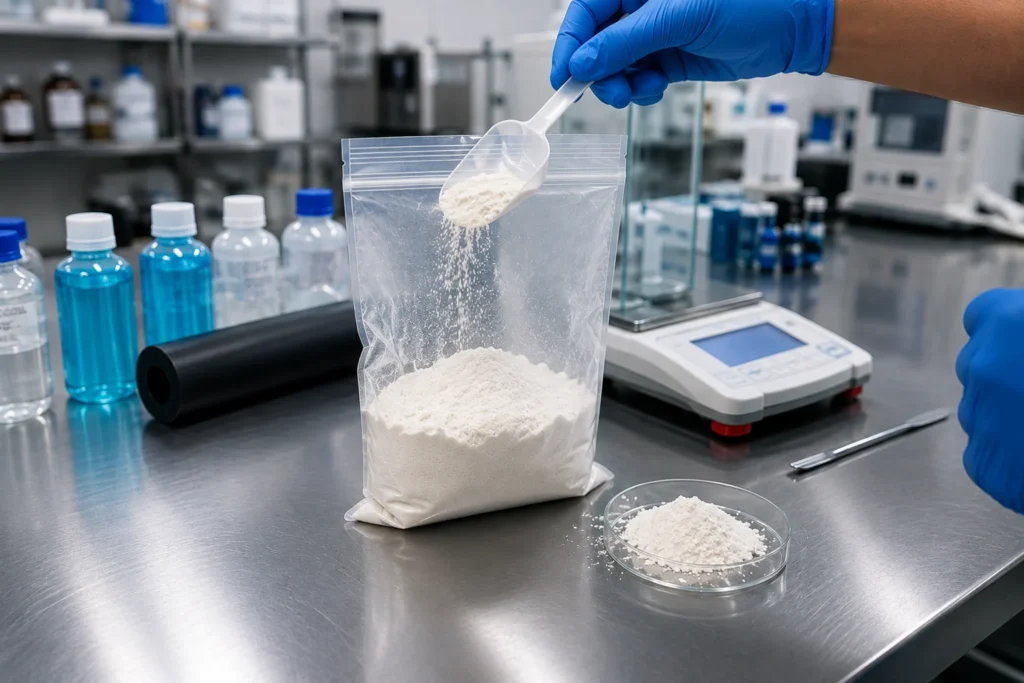
More and more researchers are now looking at the commercially available Tirzepatide peptides. The typical dose for reconstitution is thirty milligrammes of Tirzepatide. The powder is dissolved in sterile water and injected under the skin of the animal.
A Tirzepatide calculator is used to compute the right dosage in milligrammes per body weight. This is what is needed for constant outcomes. The peptide has a positive effect in most models when administered at the correct dosage.
Pre-Clinical Case Studies- Pancreatic Outcomes
| Study Model | Dose Used | Length | Key Result |
| Obese diabetic mice | Tirzepatide peptides 10mg | 8 weeks | 15% more beta cells, lower fasting glucose |
| High-fat diet rats | Tirzepatide peptide 30mg | 12 weeks | 28% beta cell growth, healthier islet structure |
| Chemically induced diabetes mice | Tirzepatide peptide 40mg | 16 weeks | Partial islet repair, 35% less cell death |
| Genetic diabetic (db/db) mice | Tirzepatide peptide 60mg | 20 weeks | Near-normal C-peptide, intact islet shape |
How to Reconstitute and Dose Tirzepatide Correctly
When handling, please add bacteriostatic water to the vial containing Tirzepatide peptides powder carefully. This will make 10 milligramme per millilitre solution. 30 milligrammes Tirzepatide + 3 millilitres water. Use a Tirzepatide calculator to determine the appropriate volume based on your test participant’s weight. Alternately, refrigerate the combined peptide at 2-8°C. You get 28 days to use it.
- The peptide should always be reconstituted aseptically.
- Track your weight weekly and adjust dosage accordingly with a peptide calculator.
- Inject in different areas of the skin of animal models each time so as to avoid skin problems.
- Measure fasting glucose at baseline, 4, 8 and 12 weeks
- You can also check your C-peptide levels to see if your beta cells are making more insulin.
What to Check Before You Buy
- Purity Report: Purity testing through HPLC must be 98% or greater.
- Third-Party Lab: The peptide identification and dosage should be verified by an outside laboratory.
- Cold Storage: Powder should be stored at -20°C prior to shipping.
- Dose Options: You can get 10 mg, 30 mg, 40 mg and 60 mg vials from trusted vendors.
- Mixing Guidance: Look for vendors who provide reconstitution instructions or a calculator.
- Fast Shipping: The research has a short turnaround time, and there is a great need for a provider that can handle this.
Frequently Asked Questions
Is the complete reversal of type 2 diabetes with Tirzepatide possible?
One is the amount of damage to the beta cells. Tirzepatide research peptide has proven to be a significant improvement in early stage diabetic models. The patient’s fasting glucose level returned to normal. In a few cases beta-cell function was returned. In complex models with large cell death results are only partial. The discipline even welcomes partial recovery as an important thing.
- The best chance of a full recovery from diabetes is in its early stages.
- C-peptide and beta-cell mass are the best markers to follow.
- The efficacy of a drug depends on the dose and the length of the trial.
What is an optimal dose in research on beta cell recovery?
The bulk of research points to an optimal range of Tirzepatide dosages between 30 and 40 mg. For these levels there are no observed negative side effects in the beta-cell development. The Tirzepatide 60 mg dosage is used in more severe cases.
- Most studies have indicated that 30 and 40 milligrammes are effective.
- Use a peptide calculator to make sure you get the right weight-based dose.
- Insulin production and beta cell histology should be monitored for best outcomes.
How do I properly reconstitute the Tirzepatide-peptide powder?
Add 3 mL of bacteriostatic water to the vial (30 mg). With a drizzle along the opposite wall. Gently swirl and mix well. Did not shake. It can break down the peptide. Confirm your dosing with a Tirzepatide peptide calculator. Store at 2 to 8°C for storage. Mix well.
- Use bacteriostatic water only for best stability, not regular saline.
- Gently swirl the vial, do not shake vigorously.
- Discard any peptide that has not been used after 28 days, and mark the vial with the date.
Where can I purchase Tirzepatide for research purposes?
There are several online vendors selling it. Check purity documents first. Sichuan Pengting Technology Co., Ltd. provides Tirzepatide alternatives of peptide sciences. They deliver quality, you can believe it. Tirzepatide is available in 10 mg vials for pilot studies and larger vials for larger investigations.
- Always request a Certificate of Analysis (COA) before placing your order.
- Choose vendors that support their research buyers.
- Complete purity verification of Sichuan Pengting research peptide Tirzepatide.
Conclusion
Pirzepatide is a blood-sugar medication. But it has more uses too. This treatment addresses the root of the cause of Type 2 Diabetes. It heals beta-cells. It cuts the glucagon. From three different perspectives fasting glucose is lowered. Very few peptides can do all of that at once.
Sichuan Pengting Technology Co., Ltd. have all the Tirzepatide peptide dosages you could possibly need, from 10 mg for a pilot study to 60 mg for a full protocol. All the main dosage forms of their Tirzepatide peptides are available in their catalogue, with full documentation and verification of purity.