The global cosmeceutical market, projected to surpass $85 billion by 2028, is undergoing a scientific renaissance as peptide-based formulations emerge from the realm of biomedical research to redefine the gold standard in anti-aging and functional skincare. With over 40% of consumers now prioritizing ingredient efficacy backed by clinical data, and the peptide cosmetics segment growing at a remarkable 7.5% CAGR, these bioactive molecules represent the convergence of pharmaceutical rigor and cosmetic elegance.
Peptide-based cosmeceuticals are demonstrating unprecedented clinical results—showing 20-40% improvement in wrinkle depth, 15-30% increase in skin firmness, and significant enhancement in barrier function—by delivering targeted biological instructions to skin cells, moving beyond mere surface hydration to actively reprogram the skin’s aging mechanisms at a cellular level.
This comprehensive analysis explores the cutting-edge science, formulation breakthroughs, and clinical validation behind peptide cosmeceuticals, establishing a new paradigm for evidence-based skincare that delivers measurable, transformative results.
The Science of Skin Aging and the Peptide Intervention
Understanding the biological targets of skin aging is essential to appreciating the mechanism of action of therapeutic peptides.
The Multifactorial Nature of Skin Aging
Intrinsic and extrinsic factors driving the aging process that peptides address:
- Collagen and Elastin Degradation: Annual 1-2% loss of collagen post-25, coupled with MMP enzyme overexpression.
- Cellular Senescence: Accumulation of non-dividing cells that secrete inflammatory factors (SASP).
- Extracellular Matrix (ECM) Disorganization: Fragmentation of structural proteins and glycosaminoglycan depletion.
- Barrier Function Compromise: Reduced ceramide synthesis and increased transepidermal water loss (TEWL).
How Peptides Communicate with Skin Biology
Peptides act as precise molecular messengers:
- Signal Peptides: Stimulate fibroblasts to produce collagen, elastin, and other ECM components.
- Neurotransmitter-Inhibiting Peptides: Temporarily reduce muscle contraction to soften expression lines.
- Carrier Peptides: Deliver essential trace elements (e.g., copper) to wound repair enzymes.
- Enzyme-Inhibitor Peptides: Block collagen-degrading enzymes like MMPs.
“Peptide cosmeceuticals represent a fundamental shift from cosmetic ‘cover-up’ to biological ‘communication.’ We are no longer just placing inert moisturizers on the skin; we are delivering specific instructions to cellular receptors, telling skin cells to behave younger. This is the true essence of functional, results-driven skincare.” — Dr. Anya Petrova, Director of Cosmetic Science, Global Skincare Institute.
Key Peptide Classes in Modern Cosmeceuticals
Different peptide families target distinct pathways in the skin aging cascade, allowing for synergistic formulations.
Signal Peptides: The Collagen Stimulators
Peptides designed to upregulate key structural proteins:
| Peptide | Sequence/Common Name | Primary Mechanism | Clinical Evidence |
|---|---|---|---|
| Palmitoyl Pentapeptide-4 | Matrixyl® / Pal-KTTKS | Stimulates collagen I, III, IV; fibronectin | 12-week study: 28% reduction in wrinkle depth |
| Palmitoyl Tripeptide-1 | Biopeptide CL™ / Pal-GHK | Stimulates collagen, glycosaminoglycans; anti-inflammatory | Increases collagen synthesis by 350% in vitro |
| Acetyl Hexapeptide-8 | Argireline® | Inhibits SNARE complex, reducing neurotransmitter release for muscle relaxation | 30% reduction in wrinkle depth vs. placebo after 30 days |
| Tripeptide-10 Citrulline | Decorinyl® | Mimics decorin, regulates collagen fibrillogenesis for organized fibers | Improves skin firmness and texture |
Neurotransmitter-Inhibiting Peptides (Topical “Botox-like”)
Targeting dynamic expression lines without injection:
- Acetyl Hexapeptide-8, -3, -30: Variants with differing efficacies and mechanisms targeting SNAP-25 protein
- Pentapeptide-18 (Leuphasyl): Inhibits catecholamine release for muscle relaxation.
- Dipeptide Diaminobutyroyl Benzylamide Diacetate (Syn®-Ake): Mimics Waglerin-1 to competitively inhibit acetylcholine receptors.
- Formulation Challenge: Requires penetration to the neuromuscular junction; often paired with liposomal or nanoparticle delivery.
Carrier Peptides and Enzyme Co-Factors
Peptides that deliver essential minerals or regulate enzymatic activity:
- Copper Tripeptide-1 (GHK-Cu): Delivers bioavailable copper to enzymes for collagen cross-linking and tissue remodeling; potent antioxidant.
- Palmitoyl Tetrapeptide-7 (Rigin™): Reduces IL-6 inflammation, a key driver of ECM degradation and cellular senescence.
- Tripeptide-1 (Kollaren™): Specifically stimulates the production of type III collagen.
Advanced Formulation Technologies for Peptide Delivery
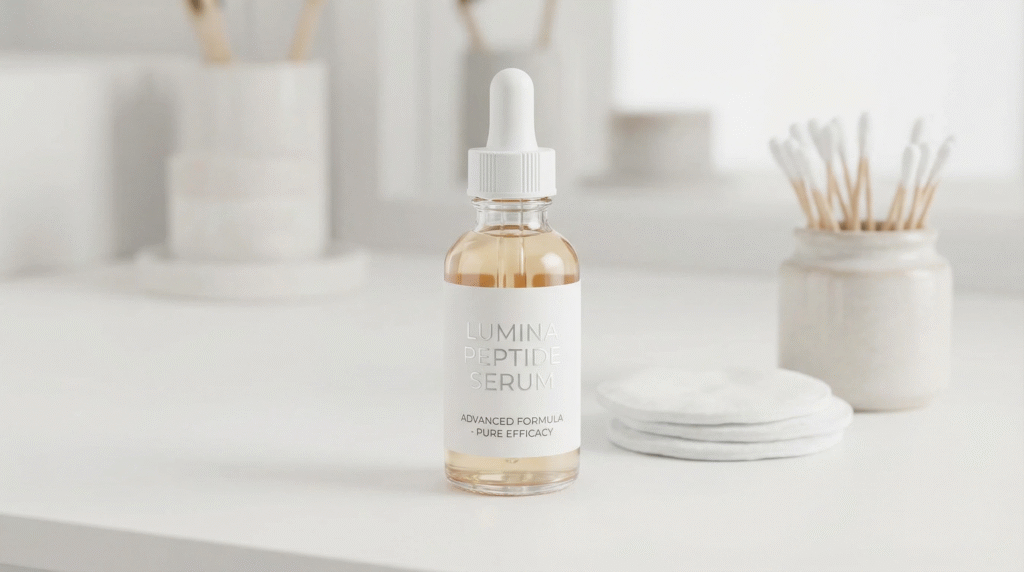
Peptide stability and skin penetration are the greatest formulation challenges, addressed by advanced pharmaceutical technologies.
Penetration Enhancement Strategies
Overcoming the stratum corneum barrier to reach viable epidermis and dermis:
- Liposomal Encapsulation: Phospholipid vesicles fusing with cell membranes to deliver payload intracellularly.
- Nanoparticle Carriers: Polymeric nanoparticles (PLGA) providing sustained release and protection.
- Pepetide Prodrugs: Acetylation or palmitoylation to increase lipophilicity and stability (e.g., Pal-KTTKS).
- Iontophoresis & Sonophoresis: Device-assisted delivery in clinical settings.
Stability and Preservation in Cosmetic Bases
Ensuring peptide integrity throughout shelf-life and use:
| Challenge | Solution | Rationale |
|---|---|---|
| Enzymatic Degradation | Use of D-amino acids, cyclization, or N-acetylation | Resists skin peptidase activity |
| Hydrolysis/Oxidation | Anhydrous or oil-based serums, oxygen-impermeable packaging, chelating agents | Prevents chemical breakdown in aqueous environments |
| Incompatibility with Preservatives | Use of peptide-compatible preservative systems (e.g., pentylene glycol, caprylyl glycol blends) | Some preservatives can denature or precipitate peptides |
| Synergy with Other Actives | Strategic layering: Peptides + Antioxidants (Vit C) + Retinoids. Avoid acidic (low pH) mixes that can hydrolyze peptides. | Peptides build matrix, antioxidants protect, retinoids stimulate turnover. |
Clinical Evidence and Efficacy Measurements
The cosmeceutical claim is supported by objective, reproducible data from controlled studies.
Gold-Standard Methodologies for Proof
Advanced tools quantifying peptide efficacy:
- High-Resolution Imaging: 3D in-vivo profilometry (PRIMOS) for wrinkle volume and depth measurement.
- Biophysical Instruments: Cutometer® for elasticity, Corneometer® for hydration, TEWL for barrier.
- Ultrasound Biomicroscopy: Measuring dermal density and thickness changes.
- Histology & Biopsy (less common in cosmetics): Direct visualization of increased collagen via staining.
Representative Clinical Trial Data
Consistent results from independent and sponsored studies:
- Palmitoyl Pentapeptide-4 (Matrixyl® 3000): 12-week, double-blind study showed significant improvement in wrinkle volume, density, and skin roughness compared to placebo.
- Copper Tripeptide-1 (GHK-Cu): Studies demonstrate accelerated wound healing, improved skin firmness, and reduction in photodamage appearance.
- Acetyl Hexapeptide-8 (Argireline®): Repeated studies show a significant reduction in the depth and area of forehead and periorbital wrinkles.
- Synergistic Blends: Formulations combining signal and carrier peptides show superior results versus single peptides, confirming multi-targeted approaches are more effective.
Regulatory Landscape and Claim Substantiation
Navigating the complex global environment between cosmetics and drugs.
Global Regulatory Classifications
How peptides are categorized in key markets:
- United States (FDA): Generally considered cosmetics if claims are limited to “appearance” and “moisturization.” Drug claims (e.g., “repairs collagen,” “treats wrinkles”) trigger OTC drug status.
- European Union: Regulated as cosmetics under EC 1223/2009. All ingredients, including peptides, must be in the CosIng database. Claims must comply with common criteria (Regulation 655/2013).
- Asia (China, Japan, South Korea): Often have specific positive lists for allowed ingredients. China’s NMPA requires pre-market registration, which can be lengthy.
Substantiation of Anti-Aging Claims
Building a defensible dossier for marketing:
- In-Vitro Data: Cell culture studies showing collagen stimulation (e.g., fibroblast assays).
- Ex-Vivo Data: Histological evidence from skin explants.
- In-Vivo Clinical Studies: The cornerstone of substantiation, using validated instrumental methods on human volunteers.
- Consumer Perception Studies: Supporting clinical data with self-assessment questionnaires.
Future Trends and Innovations
The frontier of peptide cosmeceuticals is expanding into personalized and multifunctional biotechnology.
Next-Generation Peptide Design
Emerging peptide technologies with enhanced performance:
- Stapled and Cyclic Peptides: Enhanced stability and receptor affinity by constrained 3D structures.
- Cell-Penetrating Peptides (CPPs): Sequences like TAT peptide to deliver larger cargoes (e.g., enzymes, DNA) into cells.
- Multi-Functional Peptides: Single peptides engineered to have multiple activities (e.g., stimulate collagen + inhibit MMPs + provide antioxidant activity).
- Bio-Inspired Peptides: Peptides mimicking growth factors (e.g., VEGF, TGF-β) without the regulatory burden of recombinant proteins.
Macro-Trends Shaping the Market
Broader industry shifts influencing peptide cosmeceuticals:
- Personalized Skincare: At-home diagnostic tools pairing peptide formulations with individual skin aging biomarkers.
- Blue Beauty & Sustainability: Development of biodegradable, bio-fermented peptides with lower environmental impact.
- Microbiome-Friendly Peptides: Peptides designed to support the skin’s beneficial flora while providing anti-aging benefits.
- Convergence with Nutraceuticals: Oral peptide supplements designed to support skin health from within.
FAQs: Peptide-Based Cosmeceuticals
Q: How long does it take to see visible results from using peptide-based anti-aging skincare, and are the results permanent?
A: Visible improvements from peptide cosmeceuticals typically begin to appear within 4-8 weeks of consistent, twice-daily use, with optimal results seen at the 12-week mark. Initial changes often include improved hydration, brightness, and smoother texture. Structural changes like reduced wrinkle depth and increased firmness, which require new collagen synthesis, take longer, usually becoming clearly measurable between 8-12 weeks.
The results are not permanent; they are treatment-dependent. Peptides provide instructions to skin cells, but this biological signaling needs to be maintained. If peptide use is discontinued, the skin will gradually return to its baseline aging process, and benefits will diminish over several weeks to months. Consistent use is key to sustained results.
Q: Can peptide serums be safely combined with other potent actives like vitamin C, retinoids (retinol), and AHAs/BHAs?
A: Yes, peptides can be effectively combined with most other actives, and often synergy is the goal. However, strategic formulation and application are crucial. Peptides generally pair excellently with Antioxidants (Vitamin C, Ferulic Acid, E) in the same routine (AM), as peptides build collagen while antioxidants protect it from degradation. With Retinoids, using peptides (AM) and retinoids (PM) is a powerful combination, as they work on collagen via complementary pathways.
Caution is needed with Direct Acid Combinations. Mixing a peptide serum directly in the palm with a low-ppH AHA/BHA serum or solution can potentially hydrolyze (break) the peptide bonds, reducing efficacy. The best practice is to apply acids, wait 20-30 minutes for the pH to normalize, then apply peptides, or use them at separate times of day. Always monitor skin tolerance.
Q: What is the difference between a “peptide” and a “growth factor” in skincare, and which is more effective for anti-aging?
A: Peptides and growth factors are both biological signaling molecules, but they differ significantly. Peptides are short chains of amino acids (typically 2-50). They are synthetic, stable, and designed to mimic a specific fragment of a larger protein to trigger a precise response (e.g., collagen production). Growth Factors (e.g., EGF, TGF-β) are much larger, naturally occurring proteins that regulate a broad range of cellular activities, including proliferation, differentiation, and migration. Regarding efficacy: Peptides offer targeted, well-substantiated, and consistent results for specific concerns like wrinkles and firmness.
Growth factors, while potent, have more regulatory complexity, higher cost, stability challenges, and theoretical safety concerns regarding uncontrolled cell proliferation. For most consumers, a well-formulated peptide serum provides a powerful, evidence-based, and accessible approach to anti-aging. Growth factors are often found in professional, post-procedure skincare.
Core Takeaways
- Mechanism-Driven Efficacy: Peptides work as targeted biological messengers, instructing skin cells to perform specific anti-aging functions like collagen synthesis, rather than working as passive moisturizers.
- Diverse Classes for Targeted Results: Signal peptides build structure, neurotransmitter-inhibiting peptides soften lines, and carrier peptides deliver essential co-factors, allowing for multi-targeted formulations.
- Formulation is Critical: Penetration-enhancing technologies (liposomes, nanoparticles) and stability-preserving strategies are essential to translate peptide science into effective, shelf-stable products.
- Clinically Substantiated: Gold-standard instrumental measurements (3D profilometry, cutometry) provide robust, objective evidence of peptide efficacy in reducing wrinkles and improving firmness.
- Future is Biotech-Driven: Next-generation stapled peptides, microbiome-friendly designs, and personalized approaches will push the boundaries of intelligent, results-oriented skincare.
Conclusion: Redefining the Future of Evidence-Based Skincare
Peptide-based cosmeceuticals have successfully bridged the gap between cosmetic science and molecular biology, establishing a new category of intelligent skincare that delivers measurable, reproducible anti-aging benefits. By moving beyond superficial effects to engage with the skin’s inherent repair and regenerative processes, peptides offer a sophisticated, results-oriented approach that resonates with today’s educated consumer. The convergence of advanced peptide design, innovative delivery systems, and rigorous clinical validation has created a powerful toolkit for addressing the multifaceted challenge of skin aging.
The trajectory is clear: the future of cosmeceuticals lies in increasingly sophisticated biological signaling, personalized regimens based on individual biomarker profiles, and sustainable biotechnological production. As research continues to unlock new peptide sequences and mechanisms, the potential for targeted, effective, and safe interventions for skin health and longevity will only expand. For formulators, brands, and consumers alike, embracing the science of peptide cosmeceuticals represents an investment in the most advanced frontier of skincare—where beauty is fundamentally rooted in biology.
Disclaimer:
This article contains information, data, and references that have been sourced from various publicly available resources on the internet. The purpose of this article is to provide educational and informational content. All trademarks, registered trademarks, product names, company names, or logos mentioned within this article are the property of their respective owners. The use of these names and logos is for identification purposes only and does not imply any endorsement or affiliation with the original holders of such marks. The author and publisher have made every effort to ensure the accuracy and reliability of the information provided.
However, no warranty or guarantee is given that the information is correct, complete, or up-to-date. The views expressed in this article are those of the author and do not necessarily reflect the views of any third-party sources cited.