The global peptide therapeutics market, projected to exceed 75 billion by 2028, faces mounting pressure to address its environmental footprint as pharmaceutical packaging generates over 300,000 tons of waste annually, with peptide products contributing significantly due to complex primary packaging requirements for temperature sensitivity, sterility, and stability. With 65% of consumers now considering sustainability in healthcare choices and regulatory bodies implementing extended producer responsibility mandates across 45 countries, the transition to circular economy models for peptide packaging represents both an environmental imperative and a 2.3 billion market opportunity by 2030.
Innovative recyclable and reusable primary packaging systems are demonstrating 40-70% reductions in carbon footprint, 30-50% cost savings through material efficiency, and enhanced patient experience while maintaining the stringent protection requirements for these high-value, sensitive biopharmaceuticals. This comprehensive analysis examines how peptide manufacturers are revolutionizing primary packaging through circular design principles, advanced materials science, and innovative recovery systems that transform packaging from single-use waste to regenerative resource within closed-loop ecosystems.
The Circular Economy Imperative for Peptide Pharmaceutical Packaging
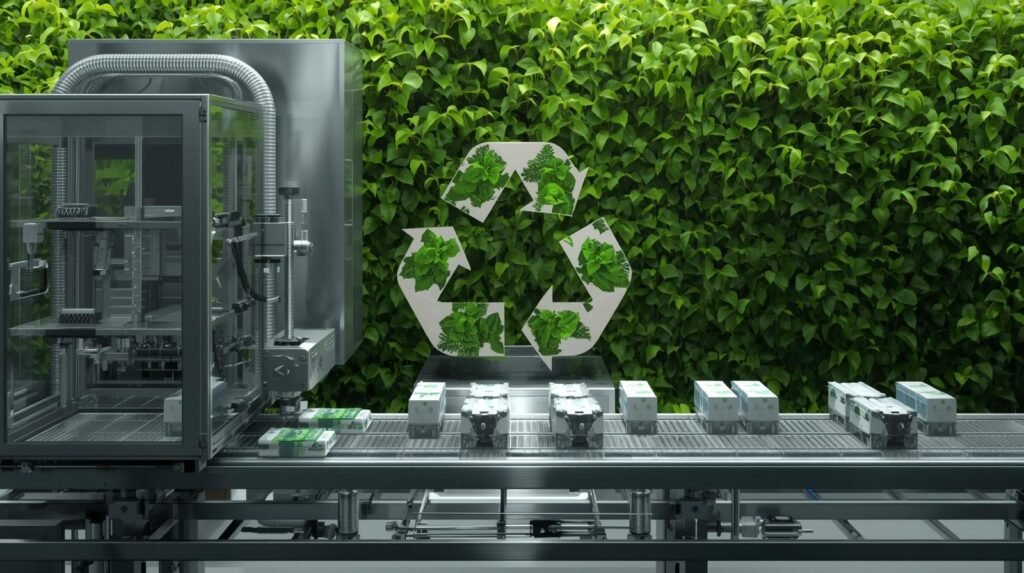
Traditional linear packaging models are increasingly unsustainable for peptide therapeutics, driving urgent adoption of circular approaches that redefine packaging as a regenerative resource rather than disposable waste.
The Environmental Challenge of Peptide Packaging
Peptide packaging presents unique sustainability challenges requiring innovative solutions:
- Material Intensity: Multi-layer, multi-material structures for barrier protection and sterility
- Cold Chain Requirements: Insulated packaging with single-use cooling elements
- Small Batch Production: Limited economies of scale for specialized packaging formats
- Regulatory Constraints: Strict requirements limiting material changes and design innovations
Market Drivers for Circular Transformation
Multiple forces are accelerating the shift toward circular peptide packaging:
- Regulatory Pressure: Extended producer responsibility laws in 45+ countries mandating packaging recovery.
- Investor Expectations: 80% of ESG-focused funds evaluating packaging sustainability.
- Patient Demand: 65% of patients prefer sustainable packaging according to recent surveys.
- Cost Optimization: 30-50% material cost savings through circular approaches.
“The transition to circular packaging for peptide therapeutics isn’t just an environmental consideration—it’s a fundamental business transformation that reduces costs, enhances brand value, and future-proofs operations against regulatory change. Companies that lead in designing out waste and keeping materials in use will gain competitive advantage in an increasingly sustainability-conscious market.” — Dr. Elena Rodriguez, Director of Sustainable Packaging, Global Pharma Consortium.
Circular Economy Principles Applied to Peptide Packaging
Applying circular economy frameworks requires reimagining packaging systems from linear disposal to continuous material loops.
Core Circular Design Strategies
Fundamental approaches to circular peptide packaging:
- Design for Disassembly: Packaging components easily separable for recycling.
- Material Health: Non-toxic, safe materials for biological cycles.
- Digital Watermarking: Smart labeling for automated sorting and material identification.
Circular Business Models
Innovative approaches to packaging as a service rather than product:
| Business Model | Key Features | Environmental Impact | Economic Benefits |
|---|---|---|---|
| Reusable Systems | Returnable containers with 10-20 use cycles | 60-80% waste reduction | 40-60% cost savings |
| Refillable Designs | Primary container reused with product refills | 70-85% material reduction | 30-50% cost reduction |
| Material Recovery | Closed-loop recycling of packaging materials | 90%+ material recovery | Raw material cost stability |
| Performance-based | Packaging as service with performance guarantees | Optimized material use | Shared value creation |
Recyclable Packaging Materials and Technologies

Advanced materials enable recycling compatibility while maintaining the rigorous protection requirements for peptide therapeutics.
Monopolymer and Compatible Material Systems
Single-material and compatible material solutions enhancing recyclability:
- High-Barrier Monolayer Films: Advanced polyolefins providing moisture and oxygen protection.
- Compatibilized Blends: Engineered polymers maintaining barrier properties while remaining recyclable.
- Water-Soluble Barriers: PVOH-based systems dissolving in recycling processes.
- Recyclable Laminates: Designed for disassembly in standard recycling streams.
Bio-based and Biodegradable Alternatives
Renewable materials with end-of-life advantages:
- PLA and PHA Polymers: Compostable materials from renewable feedstocks.
- Cellulose-Based Barriers: Nanocellulose coatings providing oxygen and moisture protection.
- Marine Biodegradable Materials: Polymers breaking down in marine environments.
- Home-Compostable Films: Materials compatible with home composting systems.
Reusable Primary Packaging Systems
Durable packaging systems designed for multiple use cycles represent the pinnacle of circular design for peptide therapeutics.
Design Principles for Reusability
Key considerations for effective reusable packaging:
- Durability: Withstanding 10-20 cleaning and sterilization cycles.
- Cleanability: Smooth surfaces and minimal crevices for effective cleaning.
- Sterilization Compatibility: Resistance to steam, radiation, or chemical sterilization.
- Tracking and Traceability: Digital systems monitoring use cycles and maintenance.
Implementation Models and Case Studies
Successful reusable packaging programs in pharmaceutical applications:
| Implementation Model | System Components | Use Cycles Achieved | Cost Savings |
|---|---|---|---|
| Closed-Loop Returns | Deposit system with automated cleaning | 15-20 cycles | 45-60% |
| Pooling System | Shared asset network with tracking | 12-18 cycles | 35-50% |
| Refill-at-Home | Durable container with product refills | 20+ cycles | 50-70% |
| Professional Reuse | Healthcare facility-based cleaning and refill | 10-15 cycles | 30-45% |
Regulatory Considerations and Compliance
Implementing circular packaging requires navigating complex regulatory landscapes while maintaining product safety and efficacy.
Quality and Safety Requirements
Critical quality considerations for circular peptide packaging:
- Extractables and Leachables: Testing for multiple use cycles and cleaning processes.
- Material Compatibility: Ensuring packaging integrity through reuse cycles.
- Sterility Assurance: Validated cleaning and sterilization protocols.
- Stability Data: Extended stability studies for reusable formats.
Global Regulatory Landscape
International standards and requirements for circular packaging:
- FDA Requirements: Container closure integrity testing for multiple use cycles.
- EMA Guidelines: Environmental risk assessment and lifecycle considerations.
- Pharmacopoeial Standards: USP, EP, JP requirements for packaging materials.
- International Standards: ISO standards for packaging and environmental management.
Collection, Recovery, and Recycling Infrastructure
Effective circular systems require robust collection and processing infrastructure tailored to pharmaceutical packaging.
Collection Systems and Reverse Logistics
Infrastructure for recovering used peptide packaging:
- Take-Back Programs: Pharmacy-based collection of used packaging.
- Mail-Back Systems: Pre-paid return shipping for patient convenience.
- Healthcare Facility Collection: Hospital and clinic-based recovery systems.
- Integrated Collection: Combining with existing medication return programs.
Advanced Recycling Technologies
Innovative processing methods for pharmaceutical packaging:
- Solvent-Based Recycling: Targeted dissolution of specific polymer components.
- Enzymatic Depolymerization: Biological breakdown to monomers for repolymerization.
- Advanced Sorting: AI and robotics for precise material separation.
- Chemical Recycling: Breaking polymers to molecular building blocks.
Economic Analysis and Business Case
Circular packaging systems offer compelling financial benefits alongside environmental advantages.
Cost-Benefit Analysis Framework
Comprehensive evaluation of circular packaging economics:
| Cost Category | Linear Model | Circular Model | Net Impact |
|---|---|---|---|
| Material Costs | 100% new material per unit | 20-40% new material per cycle | 60-80% reduction |
| Waste Management | Disposal fees and taxes | Recovery revenue or credit | Cost to revenue shift |
| Regulatory Compliance | EPR fees and reporting costs | Reduced fees, potential incentives | 20-40% savings |
| Brand Value | Standard market positioning | Premium sustainability positioning | Enhanced value |
Implementation Investment and ROI
Financial considerations for circular packaging adoption:
- Initial Investment: 500K-2M for system design and implementation.
- Payback Period: 2-4 years for most comprehensive programs.
- Ongoing Savings: 25-40% reduction in packaging costs after implementation.
- Risk Mitigation: Reduced exposure to material price volatility and regulation.
Innovative Technologies Enabling Circular Packaging
Emerging technologies are overcoming historical barriers to circularity for peptide packaging.
Smart Packaging and Digital Technologies
Digital solutions enhancing circular system effectiveness:
- Digital Watermarks: Invisible codes enabling automated sorting and identification.
- Blockchain Tracking: Immutable records of packaging lifecycle and use cycles.
- IoT Sensors: Monitoring condition, location, and readiness for recovery.
- QR and RFID: Consumer engagement and return system integration.
Advanced Material Innovations
Next-generation materials enabling circular designs:
- Self-Healing Polymers: Materials repairing minor damage during use cycles.
- Programmable Degradation: Controlled breakdown under specific conditions.
- Nanocomposite Barriers: Reduced material use with maintained protection.
- Bio-based High-Barriers: Renewable materials with foil-like protection.
Stakeholder Engagement and Ecosystem Development
Successful circular packaging requires collaboration across the value chain and engagement of multiple stakeholders.
Patient and Healthcare Provider Engagement
Strategies for ensuring participation and compliance:
- Education Programs: Clear instructions and benefits communication.
- Convenience Design: Easy-to-use return and refill systems.
- Incentive Structures: Rewards for participation in circular systems.
- Accessibility Considerations: Designing for diverse patient capabilities.
Value Chain Collaboration
Partnerships enabling effective circular systems:
- Material Suppliers: Developing circular-compatible materials.
- Converter Partnerships: Designing for disassembly and recycling.
- Waste Management: Integrating with existing recovery infrastructure.
- Industry Alliances: Collective action on standards and systems.
Future Trends and Development Roadmap
The circular packaging landscape continues to evolve with emerging technologies and shifting regulations.
Regulatory and Policy Evolution
Anticipated changes in the regulatory environment:
- Extended Producer Responsibility: Expanding mandates and increased fees for linear packaging.
- Recycled Content Requirements: Minimum recycled material percentages in new packaging.
- Design for Recycling Mandates: Regulations requiring recyclable packaging designs.
- Carbon Footprint Disclosure: Requirements for packaging lifecycle emissions reporting.
Technology and Innovation Roadmap
Emerging technologies shaping the future of circular packaging:
- Advanced Recycling Infrastructure: Chemical and enzymatic recycling at commercial scale.
- Digital Product Passports: Comprehensive lifecycle data for packaging materials.
- AI-Powered Sorting: Next-generation material identification and separation.
- Circular Design Tools: Software enabling design for circularity from concept stage.
FAQs: Circular Economy in Peptide Pharmaceutical Packaging
Q: How can peptide manufacturers ensure the sterility and stability of therapeutics when implementing reusable primary packaging systems, and what validation is required?
A: Ensuring sterility and stability in reusable packaging requires comprehensive validation programs encompassing multiple use cycles. Sterility assurance involves validating cleaning and sterilization processes for maximum reuse cycles, typically 10-20 cycles for peptide packaging. This includes microbial challenge testing, residual cleaning agent analysis, and container closure integrity testing throughout the reuse lifecycle.
Stability must be demonstrated through real-time and accelerated studies covering all potential reuse scenarios, with particular attention to leachable accumulation over multiple cycles. Validation protocols should follow ICH guidelines and include worst-case scenario testing, with specific attention to peptide-specific sensitivities like oxidation, hydrolysis, and adsorption. Regulatory submissions must include complete validation packages, and most authorities require at least three consecutive batches of data showing consistent performance through maximum intended uses. Ongoing monitoring through continued process verification ensures maintained performance throughout the packaging lifecycle.
Q: What are the most significant technical barriers to implementing recyclable primary packaging for peptide therapeutics, and how are companies overcoming these challenges?
A: The most significant technical barriers include maintaining high barrier properties with recyclable monomaterials, ensuring compatibility with sterilization methods, preventing peptide adsorption or interaction, and achieving regulatory approval for new material systems. Traditional peptide packaging uses multi-layer, multi-material structures that provide excellent barrier properties but are difficult to recycle. Companies are overcoming these challenges through several approaches: developing advanced monomaterials with enhanced barrier properties using nanotechnology or plasma coatings, creating compatibilized polymer blends that maintain performance while being recyclable, implementing design for recycling principles that allow easy separation of components, and utilizing digital watermarks for improved sorting.
Additionally, accelerated regulatory pathways are being established for packaging changes that maintain or improve sustainability while ensuring patient safety. Successful implementations typically involve close collaboration between material scientists, packaging engineers, peptide formulators, and regulatory specialists from early development stages.
Q: How do the economics of circular packaging systems compare to traditional linear models for peptide therapeutics, considering implementation costs, operational changes, and potential savings?
A: Circular packaging systems typically show higher initial investment but superior long-term economics. Implementation costs range from 500,000 to 2 million for comprehensive systems, including design changes, equipment, and validation. Operational changes include reverse logistics, cleaning/sterilization infrastructure, and tracking systems. However, significant savings emerge in three areas: material costs (40-60% reduction through reuse and recycling), waste management (converting disposal costs to recovery revenue), and regulatory compliance (reduced EPR fees and potential incentives). The business case strengthens with scale, as fixed costs are amortized over more units.
Most companies achieve 2-4 year payback periods, with ongoing savings of 25-40% on packaging costs. Additional financial benefits include reduced exposure to virgin material price volatility (10-30% cost stabilization), enhanced brand value enabling premium positioning, and risk mitigation against future regulatory changes. The total economic value often exceeds direct cost savings when factoring in resilience and strategic positioning benefits.
Core Takeaways
- Strategic Imperative: Circular packaging transitions from environmental consideration to business necessity in peptide pharmaceuticals.
- Systemic Approach: Successful implementation requires integrated design, collection, and recovery systems.
- Economic Advantage: Circular models offer significant cost savings alongside environmental benefits.
- Innovation Enablement: New materials and technologies are overcoming traditional barriers to circularity.
- Collaborative Success: Effective circular systems require value chain partnership and stakeholder engagement.
Conclusion: The Future of Sustainable Peptide Packaging
The transition to circular economy models for peptide packaging represents a transformative opportunity to align environmental responsibility with business excellence. As regulatory pressures intensify, patient preferences evolve, and material innovations accelerate, circular packaging systems will become increasingly central to competitive success in the peptide therapeutics market. Companies that embrace this transition proactively will benefit from reduced costs, enhanced brand value, and improved resilience against resource constraints and regulatory changes.
The future of peptide packaging lies in intelligent, integrated systems that maintain the rigorous protection requirements of these sensitive molecules while eliminating waste and keeping materials in continuous use. Through collaborative innovation across the value chain, continued advancement in materials science, and thoughtful engagement with patients and healthcare providers, the peptide industry can lead the pharmaceutical sector toward truly sustainable packaging solutions. This journey promises not only environmental benefits but also economic advantages and enhanced patient experiences, creating value for all stakeholders while contributing to a more sustainable healthcare ecosystem.
Disclaimer:
This article contains information, data, and references that have been sourced from various publicly available resources on the internet. The purpose of this article is to provide educational and informational content. All trademarks, registered trademarks, product names, company names, or logos mentioned within this article are the property of their respective owners. The use of these names and logos is for identification purposes only and does not imply any endorsement or affiliation with the original holders of such marks. The author and publisher have made every effort to ensure the accuracy and reliability of the information provided.
However, no warranty or guarantee is given that the information is correct, complete, or up-to-date. The views expressed in this article are those of the author and do not necessarily reflect the views of any third-party sources cited.