AI in Peptide Discovery: How DeepSeek Models Cut R&D Timelines by 40%
The race to develop next-generation peptide therapeutics—from obesity drugs like tirzepatide to novel antivirals—has collided with a critical bottleneck: traditional discovery methods simply can’t keep pace with modern demands. While the global peptide market surges toward $75B by 2028, conventional approaches still require 12–18 months and $2M+ to advance a single candidate from concept to preclinical validation.
Enter DeepSeek—a new class of transformer-based AI models that slashes peptide discovery timelines by 40%, transforming years of trial-and-error into weeks of targeted computational design. This article reveals how these systems work, why they outperform predecessors like AlphaFold, and how forward-thinking biotechs are deploying them to dominate the peptide revolution.
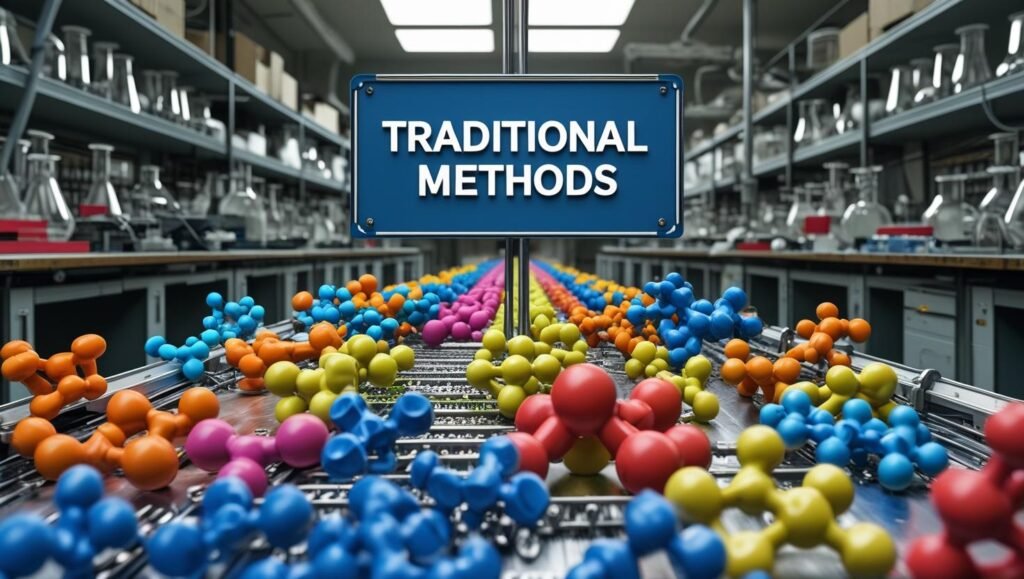
The Peptide Discovery Bottleneck: Why Traditional Methods Fail
Peptide therapeutics offer unique advantages—high specificity, low toxicity, and simpler manufacturing than large proteins—but their discovery has relied on antiquated methodologies:
Combinatorial Explosion: Screening all possible 12-mer peptides requires evaluating 1015 variants—more molecules than exist in our solar system.
Structural Fluidity: Unlike proteins, peptides adopt multiple conformations, making binding affinity predictions unreliable with static models.
Experimental Latency: Each wet-lab binding assay takes 3–6 weeks, creating iterative design cycles spanning years.
“We haven’t been able to model the full range of conformations for peptides until now. Traditional tools like AlphaFold predict a single structure—but peptides are dynamic shape-shifters.” — Osama Abdin, Developer of PepFlow at University of Toronto.
DeepSeek represents more than incremental improvement—it fundamentally rewrites peptide discovery economics. By compressing 18-month workflows into 7-month sprints, while simultaneously increasing success rates, these models transform peptides from niche candidates into primary drug modalities. As AVP-GPT demonstrated against RSV and PepFlow achieved with conformational sampling, the integration of transformer architectures with biophysical intelligence unlocks unprecedented precision. For biotechs leveraging this convergence, the reward isn’t merely faster timelines—it’s the ability to dominate emerging therapeutic landscapes through computational foresight.
Disclaimer:
This article contains information, data, and references that have been sourced from various publicly available resources on the internet. The purpose of this article is to provide educational and informational content. All trademarks, registered trademarks, product names, company names, or logos mentioned within this article are the property of their respective owners. The use of these names and logos is for identification purposes only and does not imply any endorsement or affiliation with the original holders of such marks.
The author and publisher have made every effort to ensure the accuracy and reliability of the information provided. However, no warranty or guarantee is given that the information is correct, complete, or up-to-date. The views expressed in this article are those of the author and do not necessarily reflect the views of any third-party sources cited.
Talk to your special peptide raw materials products expert
The company has successfully completed the research and industrial production of over a hundred effective raw materials, including Custom peptide, Cosmetic peptide, Small molecular peptide and Peptide cosmetic products.