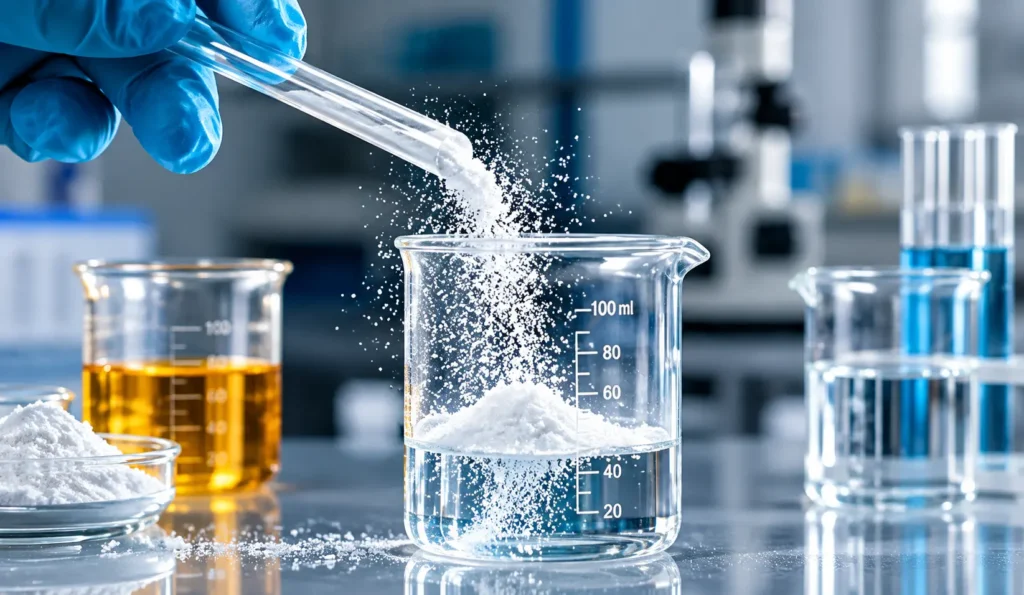
Why does a peptide pass its COA, then fail a test a few months later? It was made well most of the time. Storage was where the trouble began. Since 2021, peptide raw materials have been sold by Sichuan Pengting Technology. One thing is evident. Good peptide storage and stability depend on how you handle a peptide when it arrives.
Store peptides in a dry, sealed container in a dark place at 20 °C or cooler to maintain them stable. Liquid peptides – use shortly. Split them into small sections, do not thaw, and do not refreeze.
This guide explains what harms peptides and how to store them cold. It also includes shipping, COA checks, and stability tests.
Why Peptide Storage and Stability Matter
Peptide storage and stability means preserving a peptide in the same state from delivery to usage. Bad storage leaves less real peptide in the vial. Broken or altered pieces are also left behind. Your test findings then alter, even if the COA seemed acceptable.
A spoiled bulk lot loses money and slows your job down.Brands that buy cosmetic peptide raw materials for serums and creams face the same risks as research labs.
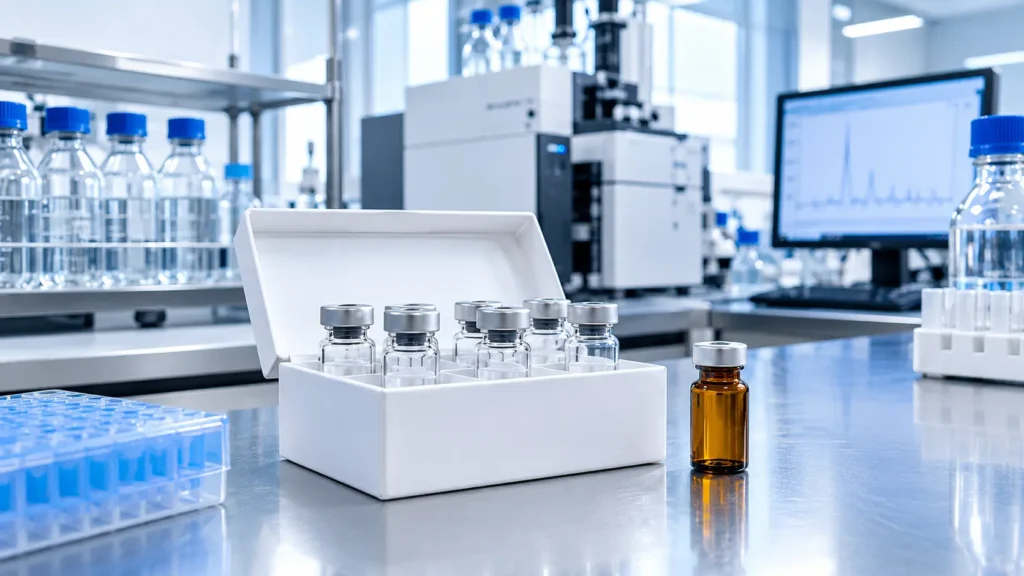
Main Risks at a Glance
| Factor | What It Does | How to Control It |
| Moisture | Breaks bonds and causes clumps | Sealed vial, dry box |
| Oxygen | Damages Cys, Met, and Trp | Fill the vial with nitrogen or argon |
| Heat | Speeds up all damage | Store at −20 °C or colder |
| Light | Causes light damage | Dark or amber vials |
| Freeze-thaw | Makes peptides clump together | Small, single-use portions |
What Breaks Down a Peptide Over Time?
Water, oxygen, heat, and light cause most peptide damage. Some amino acids break down faster than others. So the order of amino acids decides how easily a peptide breaks down.
Moisture and Hydrolysis
Hydrolysis happens when water breaks the links inside a peptide. Peptides with Asp, Glu, Lys, Arg, or His tend to soak up water from the air. When Asp sits next to Pro, the chain can split. When Asp sits next to Gly, it can change into a form that works less well.
Oxidation of Cys, Met, and Trp
Oxidation happens when oxygen in the air damages a peptide. Cysteine, methionine, and tryptophan are the most at risk. Cysteine can also stick to other cysteines in ways you do not want. To protect these peptides, fill the vial with nitrogen or argon.
Deamidation and Other Weak Spots
Deamidation is a slow change that happens to Asn and Gln over time. When Gln sits at the very start of a peptide, it can also curl into a ring called pyroglutamate. Heat and light speed up all of these changes.
Want to know how to prevent peptide degradation? Keep water, oxygen, heat, and light away from your peptide at every step.
The Right Peptide Storage Temperature
The best peptide storage temperature for dry powder is −20 °C. If you need to store it for a very long time, −80 °C is even better. In peptide storage and stability, cold matters more than anything else. As a rough rule, damage happens about twice as fast for every 10 °C of extra heat.
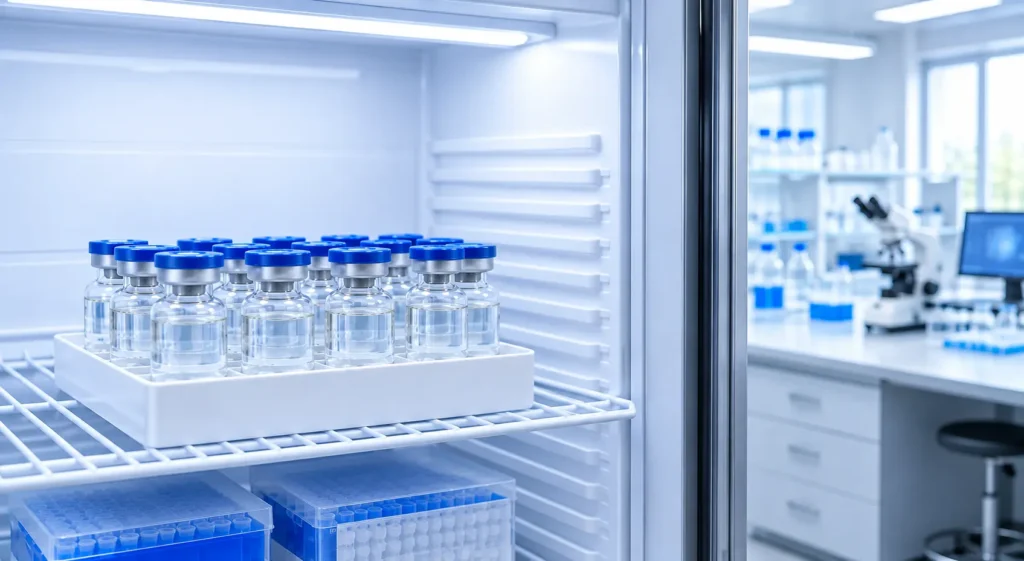
Temperature Guide by Storage Time
| Temperature | Best For | How Long |
| −80 °C | Powder and frozen portions | Very long term |
| −20 °C | Powder and frozen portions | Standard long term |
| 2 to 8 °C | Powder and most solutions | Short term; about a week for solutions |
| Room temperature | Dry powder only | Shipping or brief handling |
Avoid frost-free freezers. They warm up now and then to melt ice. Over time, these small ups and downs in temperature harm peptide freeze-thaw stability.
Lyophilized Peptide Storage, Step by Step
Lyophilized peptide storage works best when the vial stays sealed, dry, and cold. “Lyophilized” simply means freeze-dried. Most freeze-dried peptides stay good for years at −20°C. But if you open the vial the wrong way, you can spoil them fast.
Safe Steps for Dry Powder
- Keep the vial sealed until you need it.
- Let it warm to room temperature in a dry box before you open it. This stops water drops from forming.
- Weigh what you need quickly.
- Fill the empty space with dry nitrogen or argon.
- Close it tightly, wrap the cap with Parafilm, and put it back in cold storage.
- Split big bulk lots into smaller portions.
These steps are the everyday side of how to prevent peptide degradation.
Good peptide storage and stability starts with the right packaging. Pengting sends its lab-tested BPC peptide raw powder in sealed containers. These keep moisture out while the powder is on its way to you.
Handling Peptides Once They Are in Solution
Once a peptide is mixed into a liquid, its peptide shelf life gets much shorter. Liquids are the hardest part of peptide storage and stability. Many stay good for about one week at 4 °C. Peptides that break down easily should be frozen.
Use a sterile buffer at pH 5 to 6 if the peptide allows it. A 0.2 µm filter helps keep bacteria out. Do not keep peptides in DMSO for a long time. DMSO can harm Cys and Met, and it is hard to take out later.
Limiting Freeze-Thaw Damage
Peptide freeze-thaw stability comes down to one simple rule: thaw each tube only once. Before the first freeze, split your peptide into small tubes you will use one at a time. Once a tube has thawed, do not freeze it again. Write the strength, liquid used, date, and lot number on each tube.
Cold Chain Shipping and Arrival Checks
Cold chain shipping means the peptide stays cold all the way from the supplier to your lab. The trip is often where things go wrong. Dry powder can usually handle a short trip without cooling. Liquid peptides and ones that break down easily need to stay cold, often with gel packs or dry ice.
Agree on cold chain shipping terms with your supplier before you order.
What to Check When a Lot Arrives
- Make sure the seal and box are not damaged.
- Match the lot number on the label with the COA.
- Move the peptide to the right storage at once.
How to Read a Peptide COA Before Storage
Every batch comes with a test report of a peptide CoA. It informs you what the peptide is, how pure it is, and how much real peptide is in there. Once you know how to read a peptide COA, you have something to compare against later. Consider it the initial page of your records for peptide storage and stability.
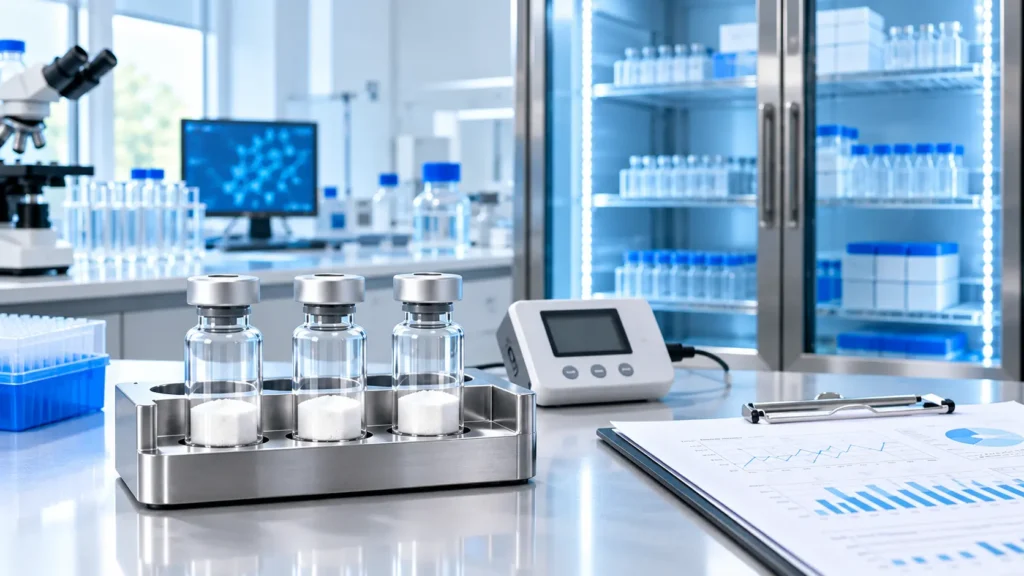
Main COA Tests Compared
| Test | Method | What It Shows | Why It Matters |
| Identity | Mass spectrometry | Molecular weight | Confirms the right peptide |
| Purity | HPLC | Target peptide vs. impurities | New peaks mean damage |
| Net peptide content | Amino acid or nitrogen test | Real peptide by weight | Helps you dose correctly |
| Counterion | Ion chromatography | TFA, acetate, or HCl salt | Changes weight and handling |
| Water content | Karl Fischer test | Water in the powder | More water means faster damage |
A peptide may have an HPLC purity of 98% and nonetheless hold substantially less real peptide by weight. The remainder is water, salts, and counterions. Keep the COA that came with your order. You’ll need this later for testing peptide stability.
Pengting supplies customers with a full package of DMF, COA, and MSDS documentation. Its raw materials meet ISO/GMP standards, as shown in the Pengting company overview.
How Stability Testing Sets Shelf Life
Peptide stability testing demonstrates how a peptide changes over time under regulated heat and humidity conditions. Most labs follow a guide called ICH Q1A(R2). Long-term tests are run at 25°C and 60% humidity. Run tests more quickly at 40°C and 75% humidity. Tests on items kept in the fridge run at 5 to 3 degrees Celsius.
Each check is analyzed by HPLC for purity. These results over time indicate when a batch may drop below its limit.
Three Types of Stability Tests Compared
| Test Type | Conditions | Strength | Weakness |
| Real-time | Normal storage | Gives true shelf life | Takes months or years |
| Accelerated | 40 °C, 75% humidity | Gives early warning | Heat may cause changes cold storage never would |
| Stress | Heat, light, oxygen, strong pH | Finds weak spots | Cannot set shelf life alone |
Only real-time tests can confirm peptide shelf life. Every peptide acts a little differently. So use general numbers as a rough guide only.
When you check a new supplier, always ask for stability data. It is a normal step in any peptide API supplier auditing checklist.
Signs a Peptide Has Started to Degrade
Signs of damage are changes you can see or measure. They show the peptide is no longer the same as when it arrived. Even with good peptide storage and stability habits, check older lots before use.
Warning Signs to Watch For
- Clumps or a hard cake in dry powder
- A change in color
- Powder that will not dissolve, or a cloudy liquid
- New impurity peaks on HPLC
- Test results that drift for no clear reason
If in doubt, test it again and compare with the first COA. Knowing how to prevent peptide degradation early costs less than a new lot.
How Pengting Protects Material Quality
Sichuan Pengting Technology supplies peptide raw materials. The company started in 2021 and is based in Sichuan, China. It works with a partner manufacturing base of 6,500 m². So far, it has made more than a hundred raw materials. These cover custom, cosmetic, and small molecular peptides, plus peptide cosmetic products.
All raw materials are 100% traceable to their source. The packaging is made from degradable materials. You can order anything from a 50 g trial batch to ton-level supply. The usual delivery time is 15 to 30 days. Learn more at Sichuan Pengting Technology.
FAQs
How long do lyophilized peptides last at −20 °C?
Lyophilized peptides can last several years at −20 °C if you keep them sealed and dry. Peptides with Cys, Met, Trp, Asn, or Gln may not last as long.
- Good lyophilized peptide storage also means keeping vials in the dark.
- Peptide stability testing tells you the real time for each lot.
Can peptide powder be stored at room temperature?
Dry peptide powder can stay at room temperature only for a short time, like during shipping. Heat and damp air make it break down faster.
- Keep the powder sealed and dry.
- Put it in cold storage as soon as it arrives.
How many freeze-thaw cycles can a peptide take?
Freeze/thaw one time in liquid for each tube of peptide. Peptide risk rises with each successive cycle, although freeze-thaw stability varies per peptide.
- Split your peptide into small tubes before the first freeze.
- Discard any residual material in thawing tube.
Why is the net peptide content lower than the HPLC purity?
Net peptide content is smaller since the powder also contains water, salts and counterions. The peptide’s impurities are the sole thing HPLC purity compares.
- Common counterions include TFA, acetate and HCl.
- That’s why it’s helpful to know how to read a peptide COA.
Should a reconstituted peptide be refrigerated or frozen?
A combined peptide may be stored at 2 to 8 °C in the fridge for approximately a week. If you want to keep it longer, freeze it at −20 °C or below.
- Select the peptide storage temperature depending on how soon you plan to utilize the peptide.
- Freeze in small tubes and use one at a time.
What is the best container for storing peptides?
The optimum container is a firmly sealed vial filled with nitrogen or argon . Glass and plastic (polypropylene) vials both work.
- Seal the cap with Parafilm .
- Place the vials in a second box with a desiccant pack.
Conclusion
Good peptide storage and stability are a matter of a few easy habits. Store peptides dry, dark, cold and sealed. Split them into small quantities and compare them to the COA. These habits save you money and keep your test results honest.
If you need a steady supply, Sichuan Pengting Technology Co., Ltd. offers peptide raw materials with full DMF, COA, and MSDS documents. You can start with a 50 g trial batch. Need a COA, stability data, or a bulk price? Contact the Pengting team.