
Two sellers both say their peptide is 99% pure. How do you know who is telling the truth?
Look at the paper that comes with the batch. It is called a peptide COA. That is short for certificate of analysis. Sichuan Pengting Technology Co., Ltd. has sold peptide raw materials since 2021. It sends a COA with every batch. One thing is clear. A purity number means little without the data behind it.
You will see what to check, how the two main tests work and what a bad report looks like.
A peptide COA should show the peptide name, batch number, test date, specification limits, real results, test methods, release status and an authorized signature. HPLC checks purity. Mass spectrometry checks identity. Every number must match the batch you get, not another one.
What Does a Certificate of Analysis Prove?
A certificate of analysis is a lab paper for one batch of peptide. It lists the tests, the results and the limits. The QC team runs the tests. The QA team approves the batch if it meets the rules.
The paper shows three things: what the peptide is, how pure it is and that it was released. It says nothing about other batches. Each new batch needs its own paper. It also does not mean the peptide is safe for people.
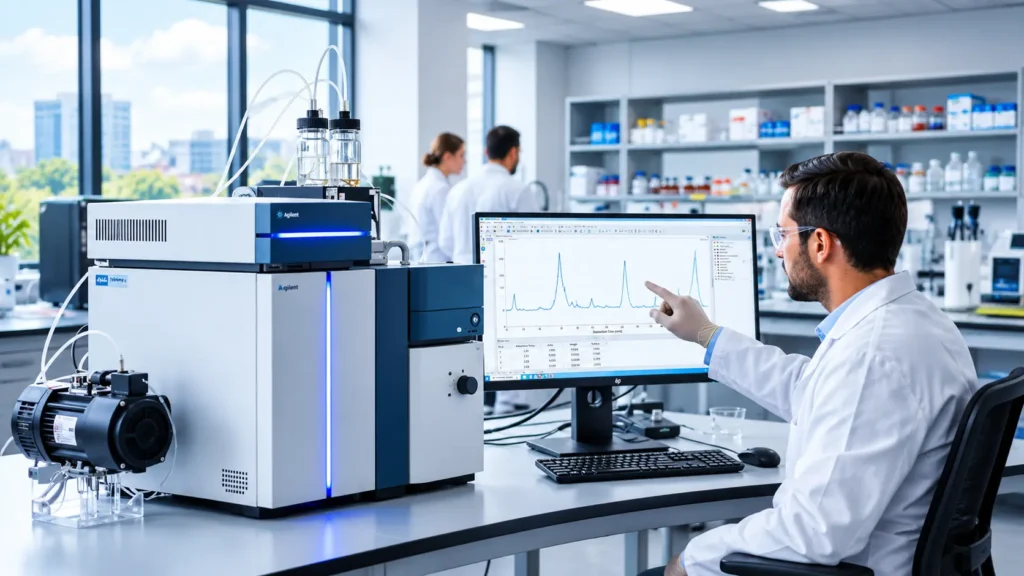
What a COA Can and Cannot Show
| Question | What the COA shows |
| Is it the right molecule? | Yes, if mass spectrometry data is included |
| Is the batch pure? | Yes, by the stated method, for that batch only |
| Did the batch pass release? | Yes, if a release status is listed |
| Will the next batch match? | No. Each batch needs its own paper |
| Is it safe for people? | No. A COA is not a safety approval |
Which Fields Should Every Peptide COA Show?
Each report should have six items. Peptide name, lot information, dates, limitations with results, a release decision, and storage. A nice model is a GMP guide, ICH Q7. Section 11.4 includes a lot number, a date of release, tests with limitations and results, and a dated signature.
Product Identity Details
The report has to provide the specific peptide. Look for name, CAS number, chemical formula, molecular weight, and appearance. Add amino acid sequence if possible.
One example is the page for Alarelin Acetate on the Pengting site. CAS No. 79561-22-1. C56H78N16O12. Molecular weight 1167.33. White powder. 99% Pure

Batch Number and Lot Traceability
The code on the COA should be the same as the code on the vial, the packing list, and the invoice. This provides you guys with traceability. If the codes are different, the paper may be from a different lot.
Test Date and Release Date
The test date indicates when the lab performed the test. Red flag: fresh cargo with an outdated date. Ask about when the lot was manufactured and released.
Specification Limits Next to Actual Results
An excellent report contains two columns. One displays the limit. The other displays the outcome. For example, a minimum purity is adjacent to the actual purity. “Pass” or “Conforms” by itself is not good enough.
Release Status and Authorized Signature
Release Status indicates whether the lot was released or refused. Look for the QC analyst name and a signature to show QA clearance.
Storage Conditions
The Alarelin website mentions -20°C for long-term storage. It states 2℃ to 8℃ for short-term storage.
How Does HPLC Back Up a Purity Claim?
HPLC separates the material into peaks. Purity is the ratio of the area of the main peak to the overall area. The normal method for assaying peptides is by reverse-phase HPLC with UV detection.
What the Chromatogram Shows
The graph shows the retention time, the main peak, and the small impurity peaks. Each peak has an area percent. Our page on peptide purity by HPLC has more.
Why the Graph Matters More Than the Number
But you can’t verify a purity number without an HPLC chromatogram. It also relies on the procedure; therefore, the report should specify it. Small impurity peaks are not always a concern. Compare them to the specified limitations.
Why Does Mass Spectrometry Confirm Identity?
Mass spectrometry determines the mass of the molecule. That tells if it is the proper one. HPLC purity. MS reveals identity. You need ’em both.
Observed Mass vs Expected Mass
The measured mass must equal the anticipated molecular weight, within a minor error. Common techniques include ESI-MS and MALDI-TOF. A decent mass spectrometry report will indicate if the mass is average or monoisotopic. These are somewhat different, so compare the same kind.
Purity Without Identity
A sample may be 99% pure and yet be the incorrect peptide. But a purity figure, without a mass spec report, doesn’t tell you what chemical you have.
How Do You Read a COA Step by Step?
Seven short checks are enough.
- Match the product name and CAS number.
- Match the lot code with the vial label.
- Check the date of the test.
- Compare the limits with the results.
- Open the chromatogram and find the main peak.
- Compare the observed mass with the expected mass.
- Check that the lot was released and signed.
Extra Fields Some Reports Add
- Water content: how much of the powder is water.
- Counterion: the salt paired with the peptide, such as acetate or TFA.
- Net peptide content: how much of the powder is real peptide.
Is In-House Testing Enough?
In-house testing can be enough if the report shows full data. A third-party lab gives a second opinion. Always find out who ran the tests.
The lab or company name should be on the paper. The method should be named. You can also send a sample to your own lab and compare.
What Are the Warning Signs of a Bad Report?
A bad report makes claims you cannot check. One flag means pause. Several flags mean walk away.
Red Flags and What to Ask
| Red flag | What it may mean | What to ask the supplier |
| Missing or mismatched lot code | Paper from another lot | Which lot is in my shipment? |
| Purity with no chromatogram | The number cannot be checked | Can I see the full graph? |
| No MS data | Identity is not confirmed | Can I see the MS spectrum? |
| Only “Pass” or “Conforms” | Limits or values are hidden | What are the limits? |
| Missing or very old date | Old or reused data | When was this lot tested? |
| No signature or release decision | No QC sign-off | Who approved release? |
| Same COA for many batches | A generic template | Is this paper batch specific? |
| COA shared only after payment | Weak trust in the data | Can I see a sample first? |
Questions to Ask Before You Order
Ask to see a sample COA. Ask if the lot code will match your shipment. Ask for the full chromatogram and the MS spectrum. Ask what limits apply to your lot. For more tips on picking a seller, read How to Choose a Peptide Manufacturer.

Which Other Documents Come With a COA?
The COA, the MSDS and the specification sheet each have their own job. One cannot take the place of another. The COA gives the results for one batch. The MSDS covers safety and handling. The specification sheet sets the standard limits.
Pengting sends a COA, an HPLC chromatogram, an MS report and an MSDS with every batch. You can see sample documents before you commit. An NDA and a Quality Agreement are standard before custom work starts.
How Does Pengting Document Each Batch?
Sichuan Pengting Technology Co., Ltd. is in Sichuan, China. It started in 2021. It works on R&D, custom orders and large-scale production of peptide APIs and cosmetic peptides.
- Certificates: holds ISO 9001. Works to GMP standards through its manufacturing partner. cGMP and US DMF are planned for 2027. It does not hold them today.
- Size: a 6,500 m² cooperative manufacturing base, 5+ PhD R&D engineers and over a hundred effective raw materials. All raw materials are 100% traceable.
- Delivery: 15 to 30 days. Europe and America take 15 to 20 days. Southeast Asia takes 7 to 10 days. Urgent orders ship within 72 hours.
- Custom synthesis: takes 2 to 6 weeks. You get a quote within 48 hours after Pengting receives the sequence.
- Compliance: GLP-1 peptides are for research use only. Supply goes to verified business clients only.
Frequently Asked Questions
What is a COA for peptides?
A COA for peptides is a lab report for one batch. It lists the tests, the limits and the results.
- It also has HPLC and MS data
How do you read a peptide certificate of analysis?
You read it in seven short checks. Check the name and CAS number, the lot code, the date, the limits against the results, the chromatogram, the MS mass and the signature.
- Start with the name and end with the signature
Should a COA include an HPLC chromatogram?
Yes. The chromatogram lets you check the purity number yourself.
- A purity number alone cannot be checked
What are red flags on a peptide COA?
Red flags are signs of a weak report. Examples are a wrong or missing lot code, no chromatogram, no MS data, only “Pass,” no signature, or one COA used for many batches.
- One flag means pause, and several mean walk away
Is a COA batch specific?
Yes. One COA covers one batch. It cannot be used for another batch.
- The lot code must match your vial
Can a COA show that a peptide is safe for people?
No. A COA shows the quality of one batch. It does not show that a peptide is safe for people.
- Pengting GLP-1 peptides are for research use only
Conclusion
Before you buy, check three things: what it is, how pure it is and where it came from. A peptide COA that proves all three, with real data and a matching lot code, is one you can trust.
Ask for the HPLC chromatogram and the MS report. For this kind of paperwork, ask Sichuan Pengting Technology Co., Ltd. for a sample COA and a quote. It sends sample documents before you commit. It also says which certificates it has and which it lacks.