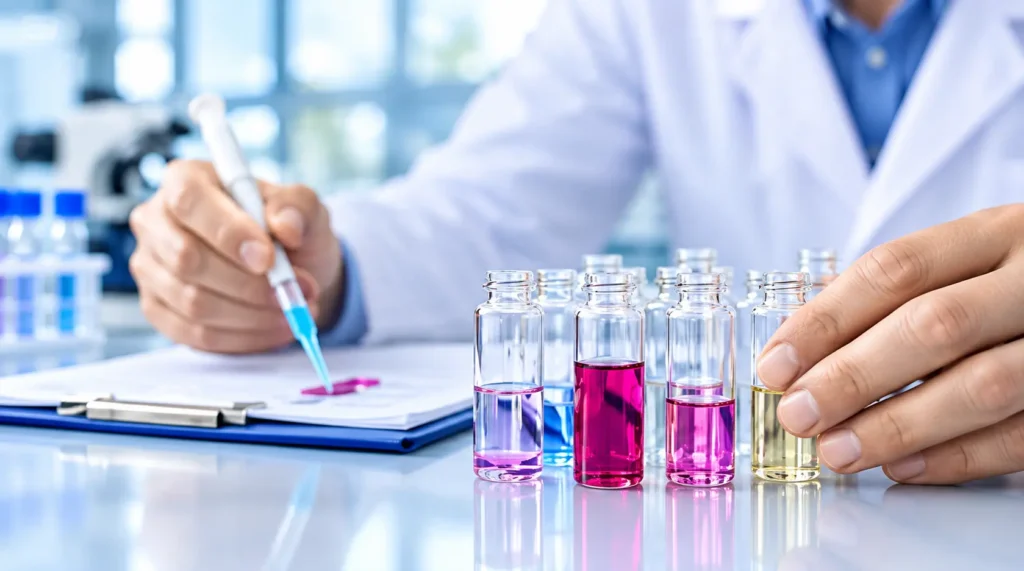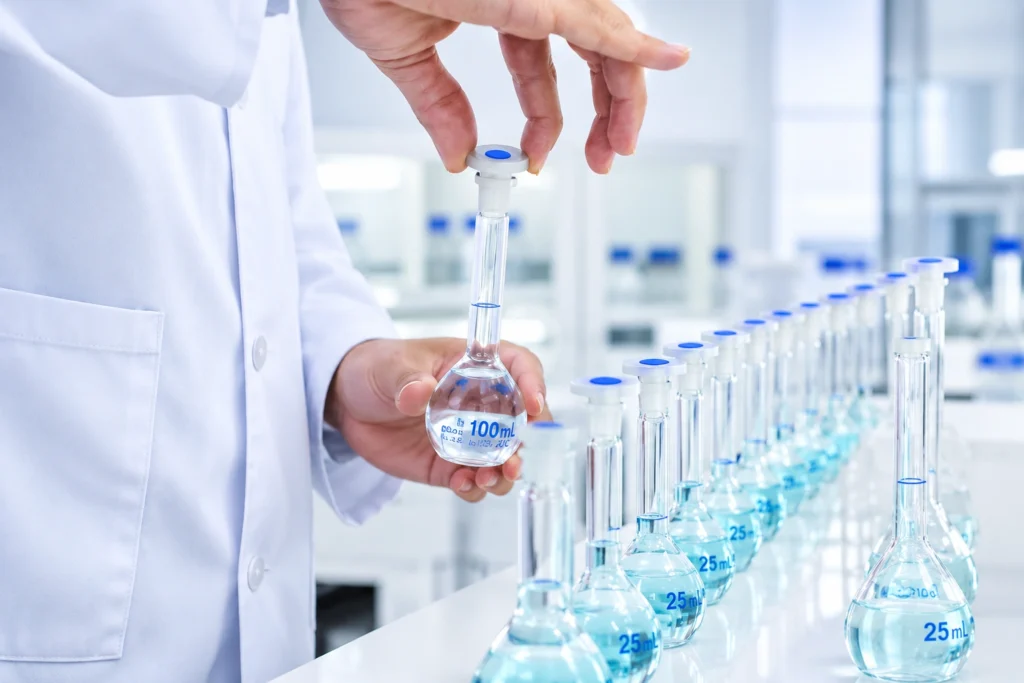
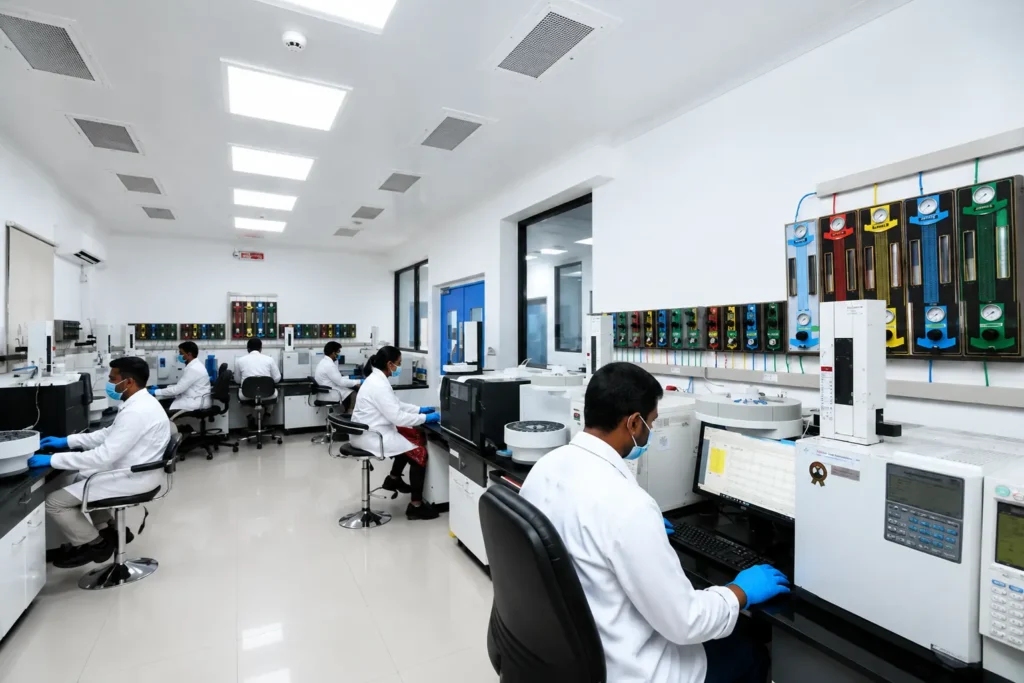
The solid phase synthesis is the choice today. So why do big manufacturers still use liquid phase peptide synthesis? The answer is simple: cost and yield vary widely as a batch grows from grams to kilograms.
Liquid phase peptide-synthesis is described in this article. Relative to solid phase methods. It also shows when the liquid phase is winning, when the solid phase is still winning and how some makers use both together.
What Is Liquid Phase Peptide Synthesis?
Liquid-phase peptide synthesis is a solution-phase peptide synthesis method, in contrast to solid-phase peptide synthesis People also say solution phase synthesis. Both names have the same meaning. The protective group is first added to each amino acid. Then it hooks on to the chain. The mixture is then cleaned for the next step.
This technique predates the development of solid phase peptide synthesis (SPPS). Many large peptide products still use it today. This liquid phase peptide synthesis is the most essential item for many vital projects.
| Feature | Description |
| Reaction setting | A liquid mix, not a resin |
| Coupling method | One step at a time, or joining pre-made pieces |
| Cleaning between steps | Extraction, precipitation, or crystallization |
| Common batch size | Grams to many kilograms |
| Common use | Large-scale peptide manufacturing |
How Does Solution Phase Synthesis Actually Work?
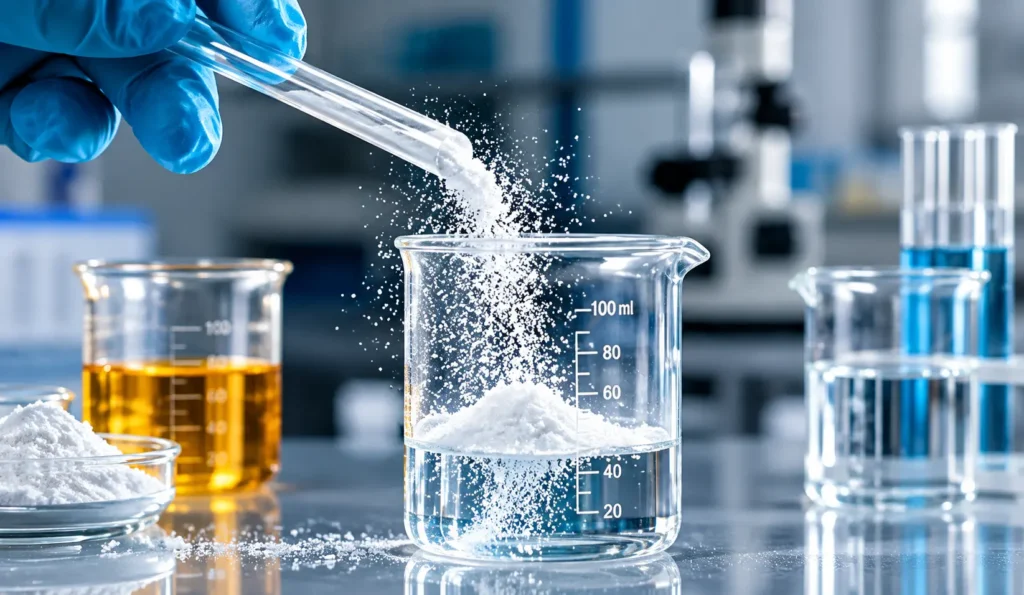
Solution phase synthesis is performed in small, iterative steps. First, an amino acid is “charged” so that it can react. Then it attaches to a second amino acid. Then the new, longer piece is cleaned up for the next round. Protective groups stop the wrong bits of each amino acid from reacting, so the reaction only occurs where it should.
The biggest difference from SPPS is immediately after each step. In SPPS you wash and filter the resin. Instead you crystallise or extract the product in the liquid phase. This one difference causes nearly all other trade offs between the two methods.
Peptide Manufacturers frequently use fragment condensation for long peptides. So they do it in short pieces first and clean each one and then they put them together. This reduces the number of small steps needed for a long chain.
Solid Phase vs. Liquid Phase Peptide Synthesis
The chemistry employed in liquid-phase and solid-phase peptide synthesis is similar. The real SPPS vs LPPS differences are in cleaning, scale and cost. Both methods employ protected amino acids. Both use coupling reagents to link them together. But for large batch sizes or chain lengths the two methods behave very differently.
| Factor | Solid Phase (SPPS) | Liquid Phase (LPPS) |
| Cleaning method | Wash and filter the resin | Extract, crystallize, or use chromatography |
| Scale limit | Limited by resin space | No resin limit |
| Cost at large scale | Rises with resin and solvent use | Often lower per kilogram at large scale |
| Best peptide length | Short to medium chains | Long chains (with fragments), or bulk short peptides |
| Automation | Easy to automate | Harder to automate; needs more hands-on control |
| Typical use | Small research batches, fast custom work | Big industrial batches, well-known peptide products |
Liquid Phase Peptide Synthesis Advantages
Once a batch is larger than the research scale there are obvious advantages to peptide synthesis in the liquid phase.
- No resin space limit. Batch size depends on liquid volume not resin space. This is helpful for large batches.
- Often cheaper at big scale. Costs per kilo are often less than with resin methods.
- Easier to check progress. HPLC is a common laboratory test that works well in liquid mixtures.
- Good for joining pre-made pieces. Clean, short pieces can connect without a solid back.
- No special SPPS machine needed. The process can be run on normal lab equipment.
LPPS Scale Advantages: Why Industry Often Prefers It
Liquid-phase peptide synthesis can be cheaper per kilogram once a batch is transferred from the research phase to full production. In SPPS, costs of resin and cleaning chemicals increase with increasing batch size. Liquid phase removes the expense of the resin. It also allows easier solvent re-use or recovery when the process is well established.
That is one reason why many large, well-known peptide products are synthesised by liquid-phase or mixed-phase methods rather than pure SPPS. The cost of the resin is almost irrelevant at small, research-size lots. SPPS wins there because it’s fast and easy. Resin costs quickly escalate with large batch sizes. That’s when the liquid phase, or a combination of both, starts to make more sense.”
But there is a tradeoff. Liquid phase work often needs more planning upfront (but not always). Every step, such as extraction or crystallisation, must be developed for that specific peptide before it becomes profitable at scale.
When Does Solid Phase Still Win Instead?
Solid phase peptide synthesis still wins for short peptides, small batches and fast turnaround. The biggest strength is its automation. The coupling steps can be run overnight with minimal human intervention on a machine. The liquid phase cannot be as easy.
Opt for SPPS when:
- The peptide is small ( ~20 to 30 amino acids or less)
- Batch size is small, grams not kilograms
- Speed is more important than cost per gram
- You’re looking for straightforward, automated steps, not a custom process work
Choose LPPS or a combination of both when batch size, chain length or long-term cost is more important
What a Liquid Phase Peptide Synthesis Protocol Generally Involves
A liquid phase peptide-synthesis protocol generally involves these four steps. Exact details vary based on the peptide and batch size. This is not a comprehensive how to, but a broad concept.
- Activate the amino acid– add a chemical group so the amino acid can react.
- Couple it in solution- The activated amino acid is coupled in solution to the growing chain or a pre-formed piece.
- Wash and extract- Clean out the leftover chemicals wash and extract
- Purify- The product is purified further by crystallisation or chromatography before the next step or before it’s finished.
These steps repeat until the entire peptide chain is formed, or all the pieces are put together.
Peptide Synthesis Methods: Solid Phase, Liquid Phase, or Hybrid?
Many leading peptide manufacturers use a combination of solid-phase and liquid-phase peptide synthesis, not just one method. SPPS is often used to construct short sequences. Then the pieces are connected using liquid phase methods. It uses the speed of SPPS for small pieces, and the scale strength of LPPS for the final build.
The mixed approach is very well suited for large scale synthesis of long and complex peptides. Pure SPPS is too expensive at that size. Building pure liquid phase, one step at a time, can be too slow to set up from scratch.
Frequently Asked Questions
- What is liquid-phase peptide synthesis?
Liquid-phase peptide synthesis is a method for making peptide chains in solution, as opposed to on a solid resin. Each amino acid is protected, coupled and then purified by some methods, such as extraction or crystallisation. It is also called solution phase synthesis.
- What is the difference between solid phase and liquid phase?
The main difference is how the mix is cleaned after each step. Solid phase synthesis is a wash of resin. Liquid phase synthesis, on the other hand, uses extraction or crystallisation. That one difference accounts for most of the others in cost and scale and automation.
- What are the advantages of peptide synthesis in liquid phase?
The main advantages are no resin size limit and often a lower cost at large scale and easier progress checks. It also eliminates the need for special SPPS equipment.
- Is this peptide synthesis used in industrial scale?
Yes. It is common in large industrial scale. Many well-known high-volume peptide products are synthesised by liquid-phase or mixed-phase methods rather than pure SPPS.
- Which is better for long peptides .
For long peptides, either liquid-phase fragment joining or a combination of both methods are often more effective. Longer chains are less efficiently produced by step-by-step SPPS. Small errors can accumulate over many steps.
- Is liquid phase peptide synthesis cheaper than solid phase synthesis?
Liquid phase peptide synthesis in large batches is often cheaper per kilogram. It doesn’t always cost less on a small scale research project. At that size the resin costs are low, so the savings from the liquid phase only really come into play when production ramps up significantly.
Conclusion
Liquid phase peptide synthesis is not a dead technique. Beyond a certain point, it’s often the smarter, cheaper choice. Batch size or chain length doesn’t matter. Solid phase synthesis is still the choice for small research batches and short peptides. The correct choice depends upon matching the method to the job.
Anyone choosing a synthesis partner should also look at their process records, test results and experience in scaling up production. And if you select Sichuan Pengting Technology Co., Ltd. for your products then you are getting the guarantee of having the best and certified products with great service.