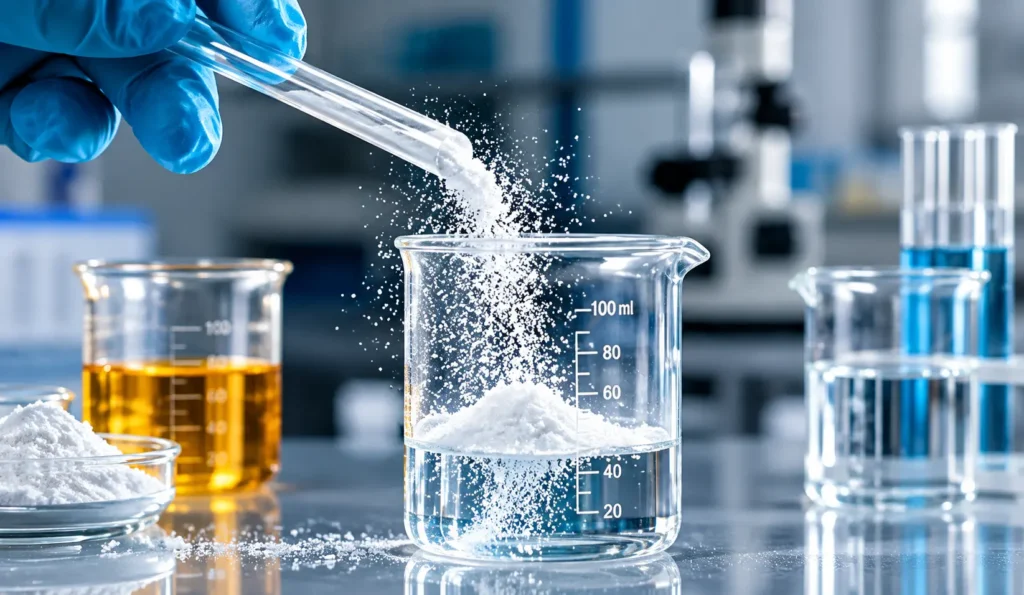
what is solid phase peptide synthesis? Solid-phase peptide synthesis is a laboratory technique. It constructs a peptide chain, one amino acid at a time. The chain is lying on a small resin bead. Chemists refer to this technique as SPPS.
Each new amino acid is added, washed and checked. That is before the next one jumps on. This is the most popular method for making peptides. It’s fast. It works nicely with machinery. It’s also easy to clean between steps.
The excess reagents wash away in seconds. Not every time you have to totally separate the liquid. Here’s a guide to how the method works. It has the tools it needs. It also shows you a complete cycle, step by step. There’s also a simple example, so it feels real, not abstract.
Highlights
- Solid Support:- peptide grows on a resin bead .
- Repeating cycle:- deprotection and coupling of each amino acid
- Quick Wash:- additional rinse reagents between steps
- Easy to Automate:- so that the cycle can be run with very little human intervention
- Best for short chains:- works well for peptides under around 50 units
What is Solid Phase Peptide Synthesis Meant?
Solid phase synthesis means that the peptide chain remains attached to a resin bead. And there it is, through every step. The bead does not dissolve in the surrounding liquid. Because the peptide never leaves the bead, excess chemicals can be washed away with a simple rinse. They do not require a complete purification step each time.
Solid phase synthesis is different from liquid phase peptide synthesis. This is known as LPPS. In LPPS the peptide is freely floating in a liquid. This requires a full separation step after each reaction. That takes longer. It also consumes more solvent. SPPS puts off most of that work until the very end.
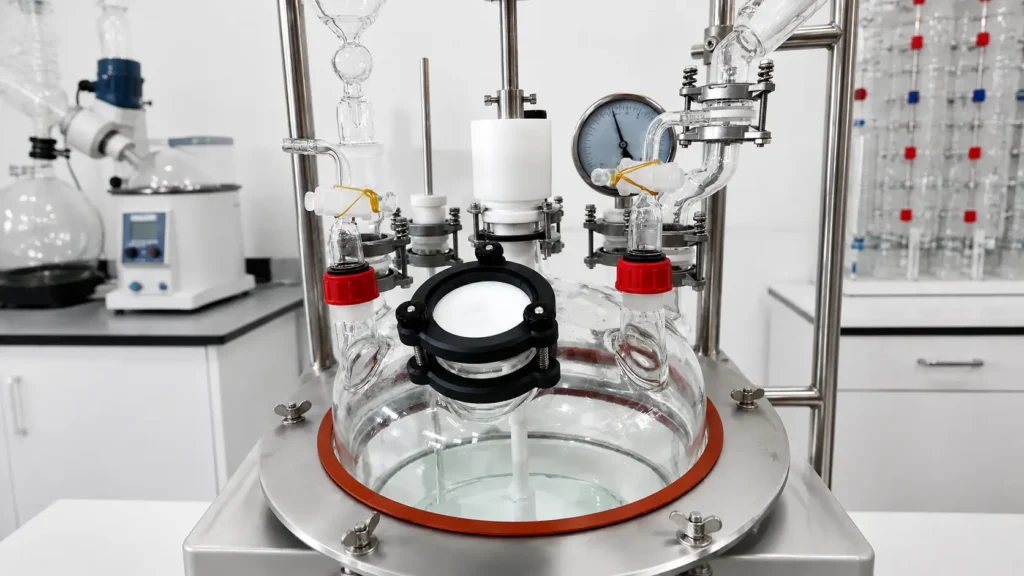
SPPS vs. LPPS at a Glance
| Factor | Solid Phase (SPPS) | Liquid Phase (LPPS) |
| Cleanup between steps | Quick wash and filter | Full liquid split each time |
| Speed | Fast, cycle-based | Slower, more manual work |
| Scale | Good for short and mid peptides | Better for very large, simple runs |
| Common use | Research peptides, custom chains | Bulk output of short, simple chains |
In the SPPS vs LPPS difference each types has its own features and there are differences between these
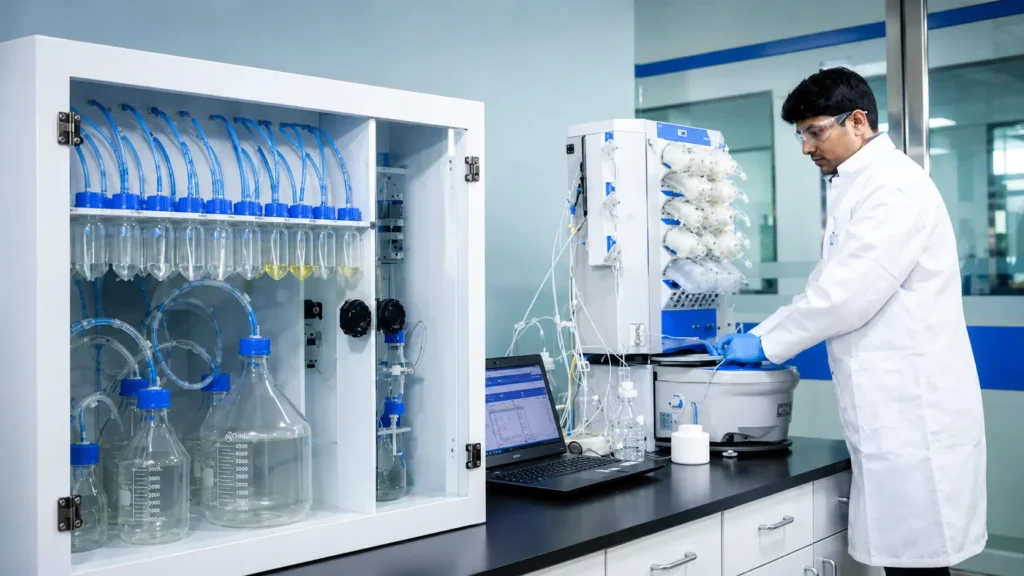
What Is a Resin for Solid Phase Peptide Synthesis?
The solid phase peptide synthesis resin is the solid support. It binds the first amino acid. On top of this starting point, every second amino acid in the chain connects . One piece at a time, this continues until the peptide is complete.
The resin also determines how the finished peptide ends. Some resins leave a free acid group at the end of the chain. Others leave instead an amide group. Choosing the right resin from the start saves time down the road. It saves you from rework.
Common SPPS Resin Types
- Wang resin:- gives you a C-terminal acid. It’s the usual first choice.
- Rink amide resin:- gives a C-terminal amide; used for many active peptides
- Merrifield resin:- older type of resin; still used for some strong chains
- Swelling step:- resin beads need to be swollen in solvent first or coupling can fail
The Solid Phase Peptide Synthesis Method, Step by Step
Solid-phase peptide synthesis method uses single stationary cycle. The cycle is repeated for each amino acid in the chain. Each time the cycle is run, one new amino acid is added to the peptide.
- Resin loading- the first aminoacid attaches to the resin
- Deprotection- Removal of Fmoc, a temporary cap on
- Coupling- the next amino acid is activated and attached to chain
- Washing- this removes any residual chemicals from the resin
- Cycle repeat- Repeat steps two through four for each remaining amino acid
- Final cleavage- the completed peptide is removed from the resin
- Purification- the crude peptide is purified, usually by HPLC, to obtain the pure target
Coupling and Deprotection Cycle: The Heart of SPPS
The whole process is driven by the cycle of coupling and deprotection. It is the engine of solid phase peptide synthesis. Each amino acid runs through this same two-step loop before the next begins.
There are two primary ways to control this cycle. The temporary cap is removed using a mild base (Fmoc chemistry). This is the most popular option today. In Boc-chemistry acid is used. Still works well for some tough chains. The purity and final yield of the peptide depend on the cleanliness of each step. One mistake can cause an error in all the following steps.
- A weak deprotection step can block a site on the chain
- Amino acid loss due to a weak coupling step
- The usual second pass of hard amino acids coupling
- A capping step fills the remaining holes
A Simple Solid Phase Peptide Synthesis Example
A simple example is a short tripeptide in solid phase peptide synthesis. That’s three amino acids linked together in a particular order. SPPS constructs this chain from one end to the other, the C-terminus to the N-terminus.
The first amino acid is attached to the resin and then de-capped. The second amino acid comes on top and too loses its cap. The third amino acid is the last to join. That closes the chain. Cut it free from the resin and clean it up and you have one clear tripeptide ready to test. A longer peptide is simply this pattern repeated more times.
Solid Phase Peptide Synthesis Protocol
The lab is following a written plan called a solid phase peptide synthesis protocol. It is the same for each run. Oftentimes, it begins with a resin swelling step. Dry resin must first swell in solvent before it will react well with the beads.
To help each amino acid join the chain, coupling reagents such as HBTU, or a pair of DIC and Oxyma are used. Workers do a Kaiser test to see that the coupling works. This is an easy colour test. It shows if there are any remaining open amine sites. Finally, the peptide is cleaved off the resin with a TFA-based cleavage mixture. It also removes the last few protective caps. Many labs translate this protocol into a slide deck or PDF guide. New employees can then take the same steps each time.
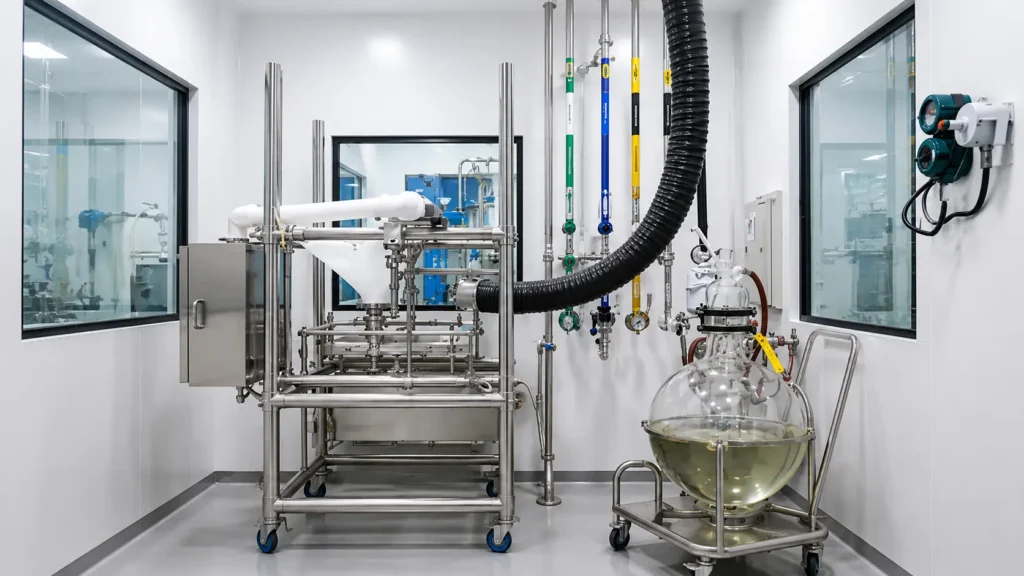
Solid Phase Peptide Synthesis Machines and Reactors: How Automation Changed SPPS
The solid-phase peptide synthesis machine runs coupling and deprotection cycles independently. These machines measure out each reagent. They time every step. They do the same cycle every time, the same way.
Reactor systems constructed for peptide work can scale the same process to larger batches. But it’s still a controlled process. The machines made these runs more reliable. Each cycle uses the same amount of reagent and wash time. This will also minimise human error. That matters most on long chains where many cycles run back-to-back.
What Are Solid Peptides Used For?
Solid peptides prepared by SPPS are RUO (research use only). This includes lab studies, test development or school or university research. Research teams like this method because it gives a clean, consistent batch of results, time after time.
- Research Use Only (RUO) raw material for laboratory research
- Studies of structure in research groups and schools
- Reference standard and test kit work
- Method for verifying custom chain production
This article considers what is solid phase peptide synthesis and SPPS only as a laboratory and research method. It also does not mention or imply any use outside of research and institutional settings.
A Quick Solid-Phase Peptide Synthesis Review
A brief overview reveals that solid-phase peptide synthesis has clear strengths and some real limitations. Looking at both sides can help a lab decide the right approach for a project.
| Advantages | Limitations |
| Fast cycle time per amino acid | Reagent cost adds up on long chains |
| Easy wash-based cleanup between steps | Harder to control past about 50 units |
| Works well with machines | Resin space limits total batch size |
| Reliable for short and mid peptides | Hard sequences may need extra coupling passes |
For most short and medium-length research peptides, the speed and the machine support justify the extra cost of the reagents. And selecting a certified and reliable peptide supplier is a vital step.
Frequently Asked Questions
What is solid phase peptide synthesis?
Solid phase peptide synthesis is a technique used to construct a peptide on a resin bead, adding one amino acid at a time. It uses a repeating cycle of deprotection, coupling and washing until the chain is complete.
- The peptide remains bound to the resin during the whole synthesis.
- The last peptide is cleaved off at the end
What is resin in solid phase peptide synthesis?
The solid support on which the growing peptide chain is anchored is a resin for solid phase peptide synthesis. Various resins give different end groups like free acids or amides.
- Wang resin provides a C-terminal acid
- using Rink amide resin to obtain C-terminal amide
What is the difference between solid and liquid phase peptide synthesis?
The important difference is where the reaction occurs. SPPS attaches the peptide to a resin bead. Liquid-phase synthesis makes the peptide able to move freely in a liquid.
- SPPS gets a quick wash to clean it up
- LPPS wants a complete liquid separation after each step
Uses for solid peptides?
Solid peptides synthesised by SPPS are used for research, structural studies and assay development. For Research Use Only (RUO) Not for use in diagnostic procedures
- Research in school and in the lab
- Reference standard and test work
What is solid phase synthesis?
“Solid phase synthesis” means one side of the reaction remains attached to a solid support. This means that waste chemicals can be washed away instead of being separated out with liquid.
- The base stays in place and reagents flow in and out
- Liquid split step is replaced by washing
How long does a solid phase peptide synthesis cycle last?
On an automated machine, one cycle of deprotection and coupling can take less than an hour. The exact time depends on the amino acid and on the resin. The longer the chain , the more cycles , not the longer the cycle takes .
- Automated machines always run at the same speed for each cycle
- A hard coupling step may require a second pass, adding time.
Conclusion
What is solid phase peptide synthesis? In the answer of this question solid-phase peptide synthesis is still the most common method of synthesis for research peptides. The resin, the coupling step and the deprotection step all work together to make the process fast, clean and easy to control. Once you get the hang of this cycle it is quite a bit easier to judge a synthesis protocol or a finished chain.
Sichuan Pengting Technology Co., Ltd. provides custom peptide synthesis service with SPPS for laboratories and schools in need of custom research-use-only (RUO) peptides made via a strong SPPS process. Their team works specifically for research and institutional buyers in the chain.